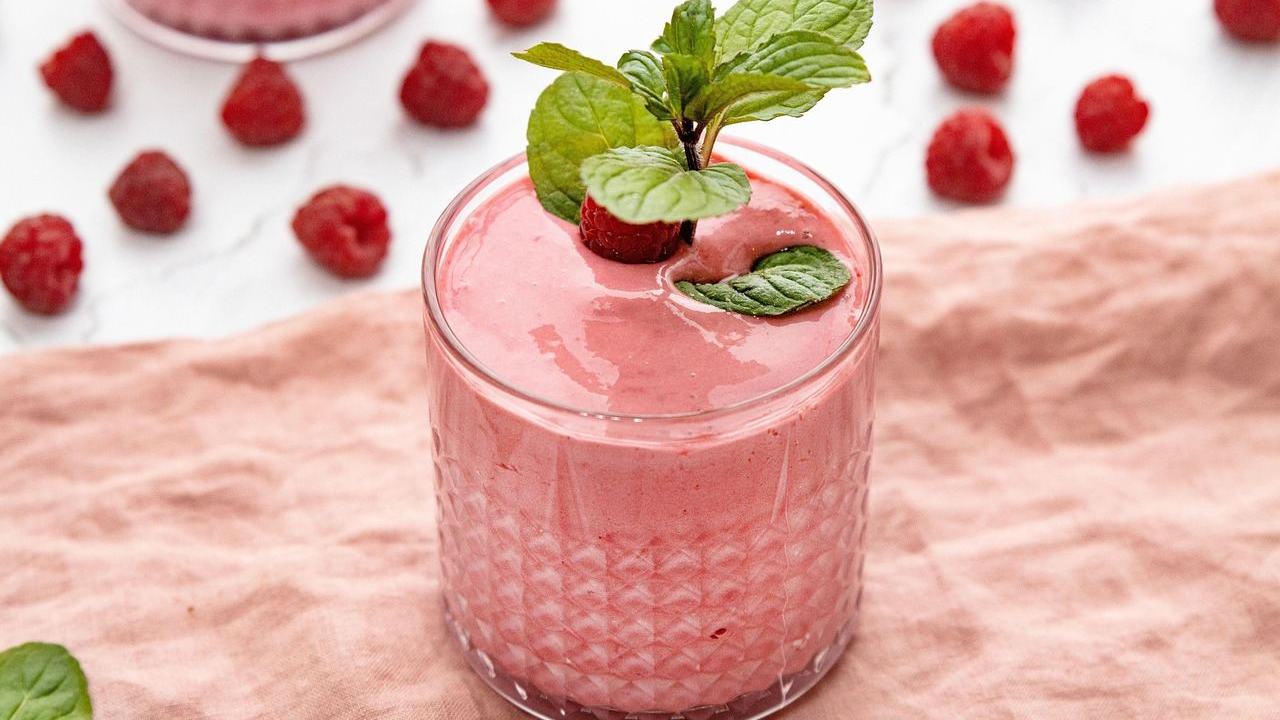
Staring at a bag of frozen fruit and wondering what to blend? These smoothie recipes follow one formula: a serving of fruit, a creamy base, an unsweetened liquid and an optional booster. Swap the fruit and it still works.
If you want more everyday ideas, the food and drink guide collects them in one place.
| Item | Value |
|---|---|
| One serving of raw fruit | 1 cup (100 grams) raw fruit |
| Fruit per day for most children and adults | 1 to 2 1/2 servings |
| One serving of yogurt | 3/4 cup (118 milliliters) |
| One serving of milk | 1 cup (240 milliliters) |
| Dairy per day for most children and adults | about 2 to 3 servings |
| Milk type suggested | fat-free or low-fat (1%) milk |
These figures come from UF Health and KidsHealth. Guidance can change, so check the source before you rely on them.
The smoothie formula
Every good smoothie has the same four parts, and the formula lets you improvise without a recipe card. UF Health even lists a smoothie made with frozen fruit and plain yogurt for breakfast as an easy way to eat more fruit.
- Fruit: frozen or fresh, whichever you have.
- Creamy base: plain yogurt, or milk if you like a thinner drink.
- Liquid: milk or water, added a splash at a time until the blender moves freely.
- Booster (optional): leafy greens, a spoonful of nut butter or a few seeds.
For amounts, start with one serving of fruit, which UF Health lists as 1 cup (100 grams) raw fruit. Pair it with a dairy serving, such as 3/4 cup (118 milliliters) of yogurt or 1 cup (240 milliliters) of milk.
Blend the liquid and soft ingredients first, then add frozen fruit last. If the drink comes out too thick, add liquid; if it is too thin, add more frozen fruit.
Four base smoothie recipes
Strawberry-banana yogurt
Blend frozen strawberries, a ripe banana, plain yogurt and a splash of milk. The banana adds sweetness, so you rarely need sugar or honey.
Tropical mango and pineapple
Combine frozen mango, pineapple chunks, plain yogurt and cold water. Using water for the liquid keeps the flavor bright.
Green apple and spinach
Blend a handful of spinach, a banana, a chopped apple and milk. UF Health counts 2 cups (60 grams) of raw leafy greens as a vegetable serving, so a generous handful is a simple way to sneak greens into a fruit drink.
Peanut butter banana
Blend a frozen banana, a spoonful of peanut butter and milk until smooth. This one is thick and filling, so it suits a breakfast on the go.
How much fruit and dairy fits in one glass?
According to UF Health, most children and adults should eat 1 to 2 1/2 servings of fruit a day, and about 2 to 3 servings of dairy. A single smoothie built on the formula can cover one fruit serving and one dairy serving.
That makes the glass a useful building block, not a whole day’s eating. KidsHealth describes MyPlate as a reminder to make half of your plate vegetables and fruits, so pair a smoothie with other produce later on.
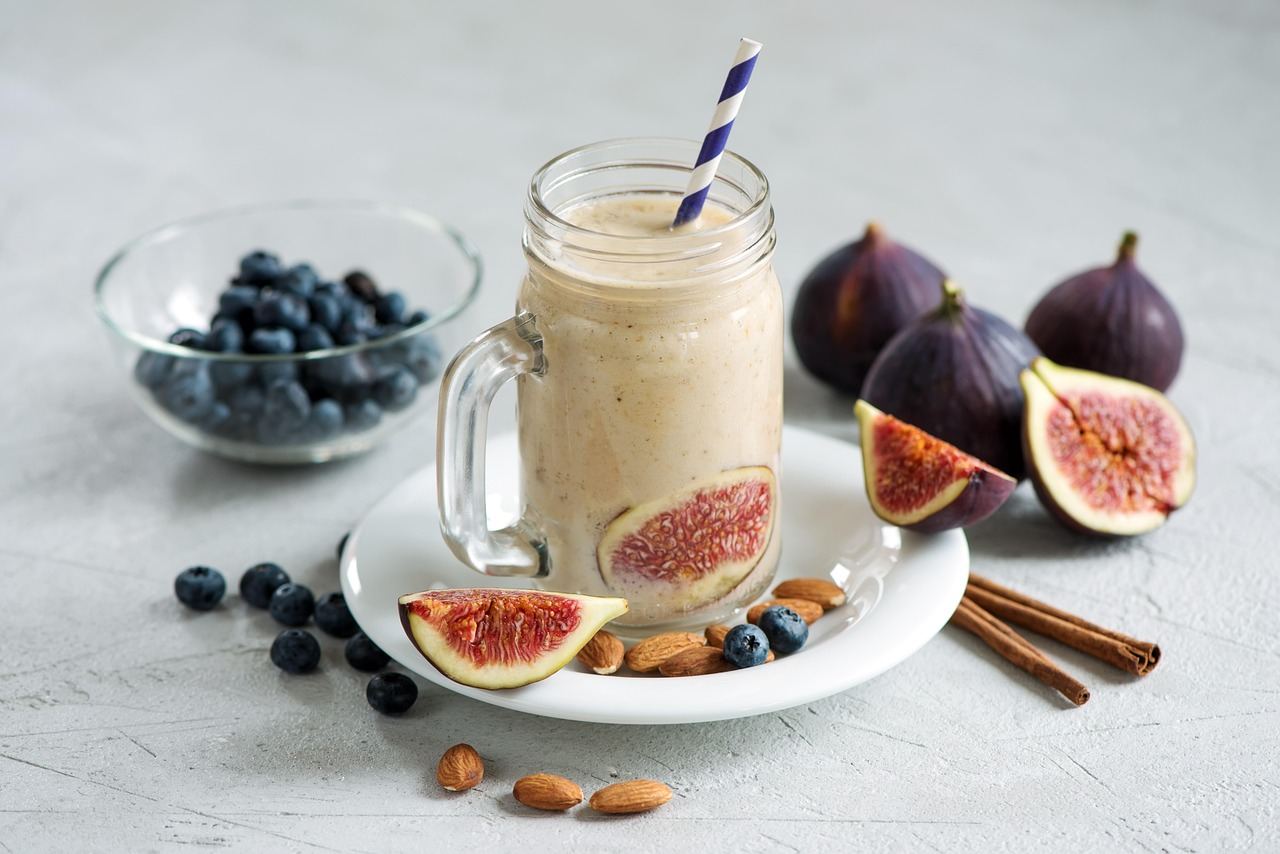
Whole fruit beats juice as your starting point. KidsHealth notes that fruit juices carry more sugar and calories per serving than whole fruit, and you miss the fiber.
Swaps for milk, sweetness and texture
Small changes keep a smoothie flexible and not too sweet. These are the swaps that matter most, each backed by the sources:
- Milk: ColumbiaDoctors repeats the MyPlate advice to switch to fat-free or low-fat (1%) milk.
- Dairy-free: UF Health counts 1 cup (240 milliliters) of calcium-fortified soymilk as a dairy serving.
- Frozen, canned or dried fruit: UF Health calls these good options when they have little to no added sugar, so read the label.
- Juice: UF Health advises limiting 100% vegetable or fruit juice or mixing it with water, so use water or milk as your main liquid.
For a thicker, spoonable texture, use less liquid and more frozen fruit. For a lighter drink, use more liquid and plain yogurt.
Fitting smoothies into a balanced day
A smoothie works best as one part of a varied day. KidsHealth says not every meal will have every food group, but you should try to include three or more, and it suggests a fruit smoothie made with low-fat milk as a dessert.
The Dietary Guidelines for Americans 2025-2030, as UF Health describes them, encourage minimally processed whole foods and discourage sugary drinks. Smoothies made from whole fruit and plain dairy fit that approach better than bottled, sweetened versions. ColumbiaDoctors adds a simple rule: drink water instead of sugary drinks.
When you want a different cold drink, the homemade lemonade recipe and the guide to iced coffee at home are good next stops.
Frequently asked questions
Can I use frozen fruit instead of fresh?
Show answer
Yes. Frozen fruit makes a colder, thicker drink, and UF Health names it as a handy way to keep fruit on hand. Pick bags without added sugar.
Is a smoothie better than a glass of juice?
Show answer
Whole fruit in the blender keeps more of what juice leaves behind. KidsHealth points out that juice lacks the fiber of whole fruit.
Which milk should I use?
Show answer
Fat-free or low-fat (1%) milk is the choice named by ColumbiaDoctors. Calcium-fortified soymilk is a dairy-free option that UF Health also counts toward dairy.
How do I make a smoothie thicker without adding sugar?
Show answer
Add more frozen fruit or a spoonful of plain yogurt, and pour in less liquid. A banana gives body and natural sweetness.