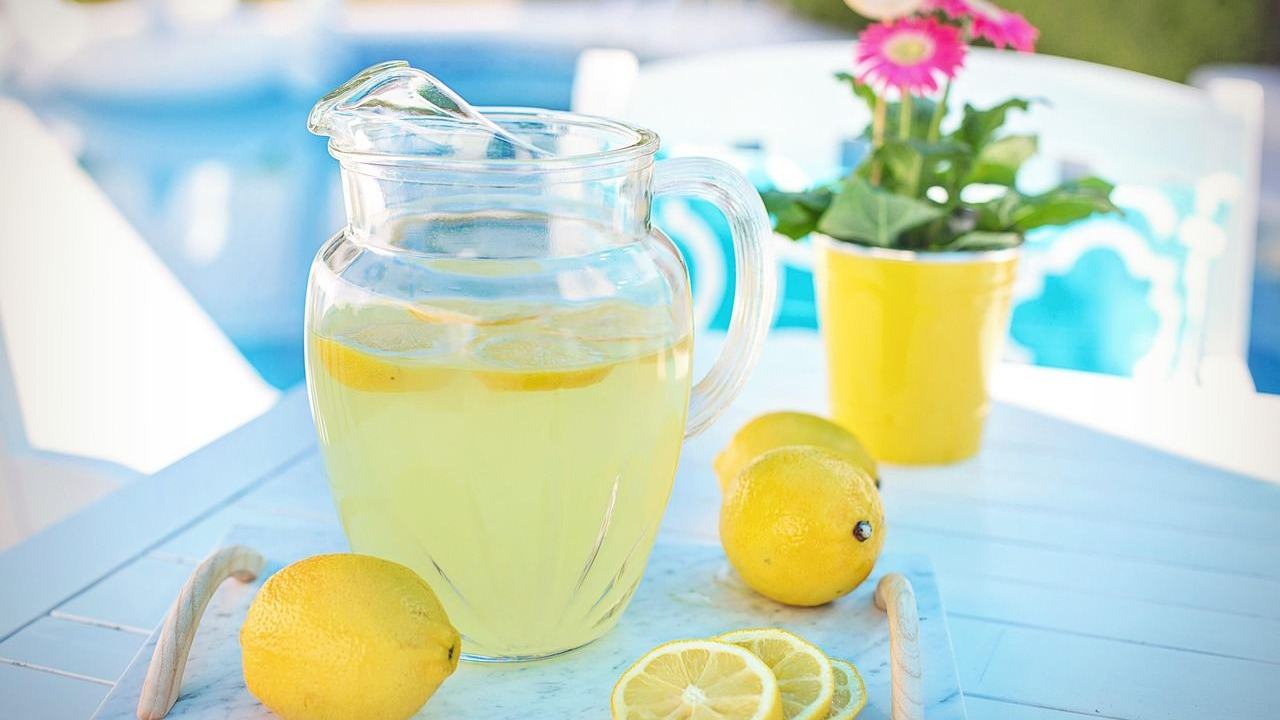
Not sure how sweet or tart to make your pitcher? This homemade lemonade recipe starts with a 3:1:1 ratio of water to simple syrup to fresh lemon juice, then you tweak it to taste.
You can find more drink and kitchen ideas in our food and drink guide.
| Item | Value |
|---|---|
| Base ratio (water : simple syrup : lemon juice) | 3:1:1 |
| Simple syrup (sugar : water, by volume) | 1:1 |
| Lemons for a 10-cup batch | 6 to 8 lemons |
| Simple syrup in the fridge | Up to 3 weeks |
| Prepared lemonade in the fridge | Up to 1 week |
These figures come from Alphafoodie and Natasha’s Kitchen, and they can change, so check the source before you rely on them.
The ratio behind a good pitcher
Every version below leans on the same trick: simple syrup, fresh lemon juice and cold water, balanced to your taste. Alphafoodie recommends a 3:1:1 ratio of water to simple syrup to lemon juice. That gives you a clear starting point to nudge in either direction.
Cooks land in slightly different places, so treat these published batches as starting points:
- Alphafoodie: 3 cups water, 1 cup lemon juice and 1 cup simple syrup, as laid out on its recipe page.
- Cup of Yum: a 2:1:5 ratio of simple syrup to lemon juice to water, which the site describes as mildly sweet.
- Love and Lemons: 3 cups of lemon juice with 6 cups of water and 1 cup of simple syrup, per its method.
- Natasha’s Kitchen: 1 1/2 cups of lemon juice with 7 cups of cold water and most of a syrup, as shown in this recipe.
The Love and Lemons mix is the most lemon-forward of the four, while Natasha’s Kitchen stretches its juice across the most water. If a glass tastes too strong, Alphafoodie says a bit more water or ice softens it.
Making the syrup and juicing the lemons
A simple syrup is sugar dissolved in water, and it matters because granulated sugar does not dissolve easily in cold water and sinks to the bottom of the pitcher. Making the syrup takes only a few minutes.
- Combine equal parts sugar and water in a small saucepan. Alphafoodie gives the ratio as 1:1 by volume, for example 1 cup of water and 1 cup of sugar.
- Heat gently, stirring, just until the sugar dissolves.
- Cool to room temperature, then chill. For faster cooling, set a jar of syrup in a bowl of ice water.
Natasha’s Kitchen uses a richer syrup, simmering 1 cup water with 1 1/2 cups sugar, so add it gradually and taste as you pour.
Juicing the lemons
Plan on about 6 to 8 lemons for 10 cups of lemonade, according to Natasha’s Kitchen. Love and Lemons needs about 12 lemons for its larger batch and offers a rule of thumb of 3-4 tablespoons juice per lemon.
- Use room-temperature lemons and roll them on the counter before cutting, as Natasha’s Kitchen advises.
- If a lemon feels stubborn, Alphafoodie suggests microwaving it on a plate for 10-20 seconds.
- No juicer? Insert a fork into the cut side of the lemon and twist while squeezing.
The type of lemon changes the result. Standard Eureka or Lisbon lemons give a classic tart flavor, while Meyer lemons are sweeter and may need less syrup, per Natasha’s Kitchen.
Mixing and serving the pitcher
Pour the cold water into a large pitcher first, then add the lemon juice and syrup so you can taste as you go. Holding back some syrup lets you correct the sweetness at the end.
- Pour the cold water into the pitcher.
- Add the chilled lemon juice and most of the syrup, then stir.
- Taste, and add the remaining syrup or a splash more water until it suits you.
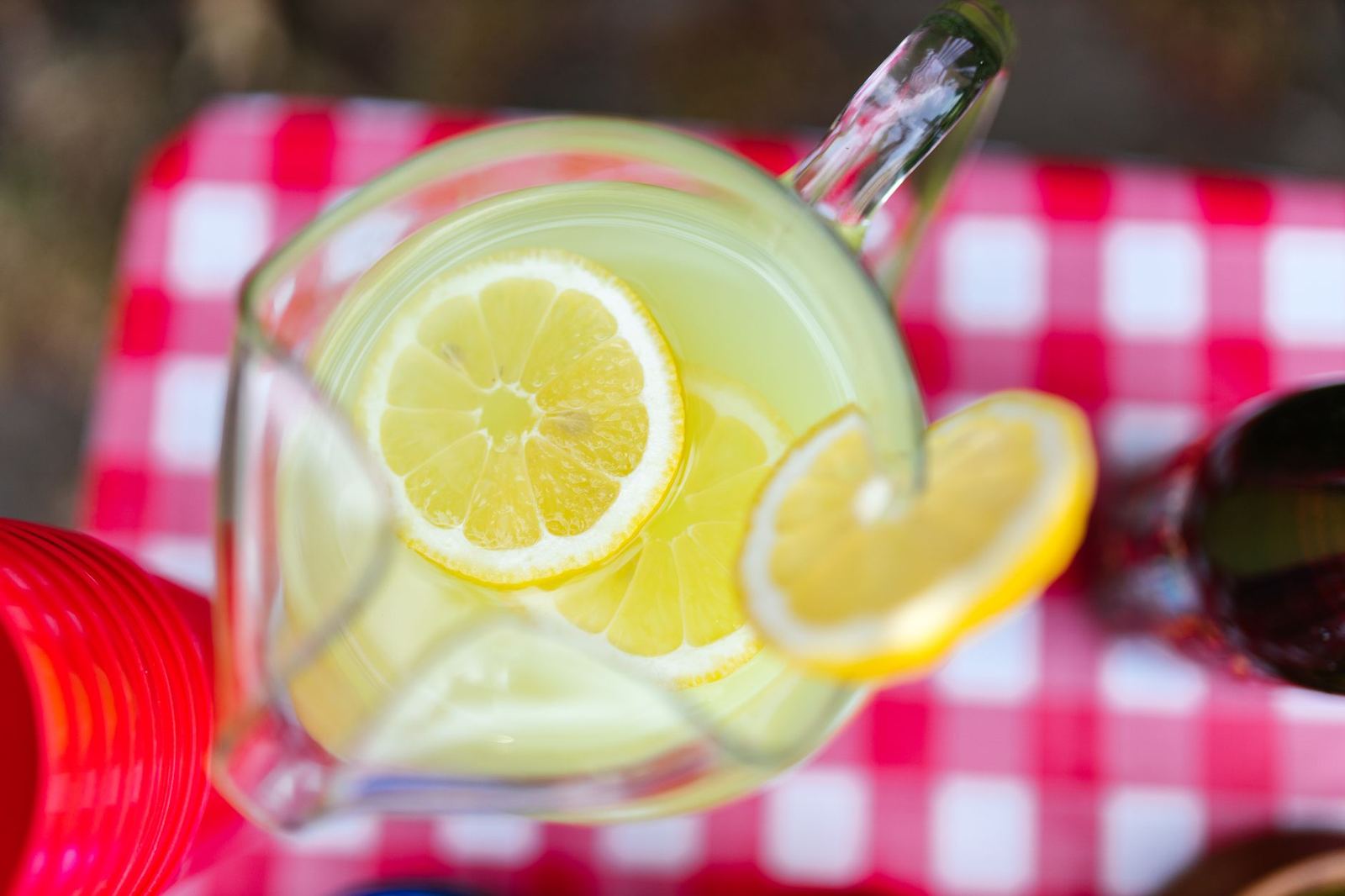
- Fill glasses with ice, pour, and garnish with lemon wheels.
Ice is where lemonade often goes wrong. Alphafoodie recommends putting the cubes in the serving glasses rather than the pitcher, though Love and Lemons stirs in several handfuls when the pitcher will be served right away.
To keep drinks cold without watering them down, Natasha’s Kitchen suggests freezing lemon juice in an ice cube tray and adding those cubes to glasses alongside regular ice.
Lemonade variations to try
Once the base pitcher is right, small changes make it your own. These ideas come from the variations that Natasha’s Kitchen lists:
- Extra lemon flavor: steep lemon zest strips in the syrup, avoiding the bitter white pith, then strain.
- Fruit: raspberry, strawberry, peach or mango puree all work.
- Herbs: fresh mint, lavender or even rosemary in the final mixture.
- Sparkling: swap the cold water for chilled sparkling water just before serving.
- Arnold Palmer: mix equal parts lemonade and unsweetened iced tea.
Syrup can carry flavor too. Love and Lemons suggests infusing it with fresh basil or mint for a more aromatic glass.
If you plan to share your pitcher online, these food photography tips can help the glass look as bright as it tastes. Fruit-forward drinks also shine when blended, so our smoothie recipes are a natural next stop.
Storing and making lemonade ahead
Published storage times vary, so lean toward the cautious end if you are unsure:
- Up to 3 days in a covered pitcher, per Love and Lemons.
- 4-5 days in the refrigerator, per Alphafoodie.
- Up to 1 week, per Natasha’s Kitchen.
For freezing, Alphafoodie says lemonade keeps for up to 2 months in a freezer-safe bottle or ice cube tray. Leave space at the top, because liquids expand when frozen.
To prepare ahead, Natasha’s Kitchen refrigerates the syrup and the juice separately in covered jars and combines them with cold water at serving time. The syrup alone keeps for up to 3 weeks there.
Frequently asked questions
Can I use bottled lemon juice?
Show answer
Fresh juice gives the brightest flavor, and Love and Lemons asks readers to skip the bottled kind. If you are short on time, Natasha’s Kitchen says refrigerated juice that is not from concentrate can work in a pinch.
How do I make lemonade sweeter or more tart?
Show answer
Add a little more syrup for a sweeter glass and more lemon juice for a sharper one, as Love and Lemons explains. Change one thing at a time and taste between additions.
Why does my lemonade separate?
Show answer
That is normal, according to Alphafoodie. Give the pitcher a good stir, or shake the bottle, before you pour.
Can I swap the sugar for honey?
Show answer
Alphafoodie notes that other sweeteners such as honey are an option. Natasha’s Kitchen also lists agave and tells you to adjust the amount to taste.