Worried your chicken will be raw while the vegetables burn? The best sheet pan dinner recipes roast hot and stagger the ingredients, pulling the chicken by thermometer rather than the clock.
This guide is part of our wider collection of home cooking recipes, so you can browse more weeknight ideas there.
| Item | Value |
|---|---|
| Roasting temperature for chicken pieces | 400°F (204°C) |
| Boneless chicken breast roasting time | 20 – 30 minutes |
| Boneless breast pull temperature | 157°F (69°C) |
| Dark meat (thigh) pull temperature | 165°F (74°C) |
| Broccoli roasting time | 10 – 15 minutes |
| Sweet potato lead over boneless thighs | a 5-minute head start |
These figures come from ThermoWorks’ sheet-pan chicken guide, and they are approximate and can change, so check the source before you rely on them.
How sheet pan dinner recipes work
A sheet pan dinner is a rimmed baking sheet holding oil-tossed vegetables with a seasoned protein nestled among them, as ThermoWorks describes it. The pan bakes at high heat until the vegetables brown and the meat is safely cooked. Because the food roasts instead of simmering, the vegetables caramelize and the meat browns.
The catch is that ingredients rarely finish together. ThermoWorks gives the example of chicken cooked with asparagus, which leaves you with overcooked asparagus or undercooked chicken if both go in at once (source). The fix is staggering: slower items go in first, quicker ones follow.
If you would rather have a saucy, simmered dinner in a single pot, our guide to one pot pasta recipes covers that style.
Oven temperature and chicken timing
A sensible starting point is 400°F (204°C), the temperature ThermoWorks uses for its chart of skin-on chicken. The table shows the approximate time at that heat and the temperature at which to pull each cut (ThermoWorks).
| Skin-on chicken cut | Approximate time at 400°F (204°C) | Pull temperature |
|---|---|---|
| Whole breast, bone-in | 30 – 40 minutes | 157°F (69°C) |
| Whole breast, boneless | 20 – 30 minutes | 157°F (69°C) |
| Thighs, bone-in | 30 – 45 minutes | 165°F (74°C) |
| Thighs, boneless | 25 – 40 minutes | 165°F (74°C) |
The times and pull temperatures above are from ThermoWorks, which says its charts draw on the New York Times cooking website; treat them as estimates and check the source.
Other guides give a slightly different spread. A guide on Alibaba’s spice blog suggests roasting chicken at 375°F-425°F depending on the cut, with boneless breasts at 400°F-425°F for 18-22 minutes. For more ways to cook that cut, see our chicken breast recipes.
Your oven may not match its dial. The same guide says most home ovens have 25°F+ variance, so an oven thermometer is worth having.
What internal temperature should chicken reach?
The Alibaba spice guide gives 165°F (74°C) as the safe minimum for all chicken parts, measured in the thickest part with a food thermometer. It adds that you can remove chicken at 160°F-162°F, because the temperature keeps climbing while it rests.
ThermoWorks argues that breast meat is safe to eat at 157°F (69°C) after 34 seconds. It also says carryover cooking keeps pulled chicken at that temperature for at least that long (ThermoWorks).
Dark meat is different. ThermoWorks says thighs and legs are safe at 157°F (69°C) but are not as enjoyable until they reach at least 165°F (74°C), because the extra collagen needs more heat to break down (source).
If you are unsure which target to follow, the cautious route is the 165°F (74°C) mark from the Alibaba guide. Either way, a thermometer beats guessing.
How to stagger vegetables and protein
Vegetable times vary widely, so use the chart as a planning tool rather than a promise. The ranges below are for roasting at 400°F (204°C).
| Vegetable | Approximate roasting time |
|---|---|
| Asparagus, whole | 8 – 15 minutes |
| Broccoli | 10 – 15 minutes |
| Brussels sprouts, halved | 20 – 30 minutes |
| Potatoes | 25 – 35 minutes |
| Sweet potatoes | 30 – 40 minutes |
| Zucchini or summer squash | 40 – 55 minutes |
These ranges also come from ThermoWorks; thickness and taste preferences shift them, so check the source if a number matters to you.
Pairing becomes simple once you know the times. ThermoWorks suggests giving sweet potatoes at least a 5-minute head start before boneless thighs go in, and holding broccoli back until bone-in breasts have cooked for about 20 minutes (ThermoWorks).
Brussels sprouts are flexible. In the ThermoWorks recipe they join the chicken from the start for very tender results, or after about 10 minutes of chicken cooking if you want more bite.
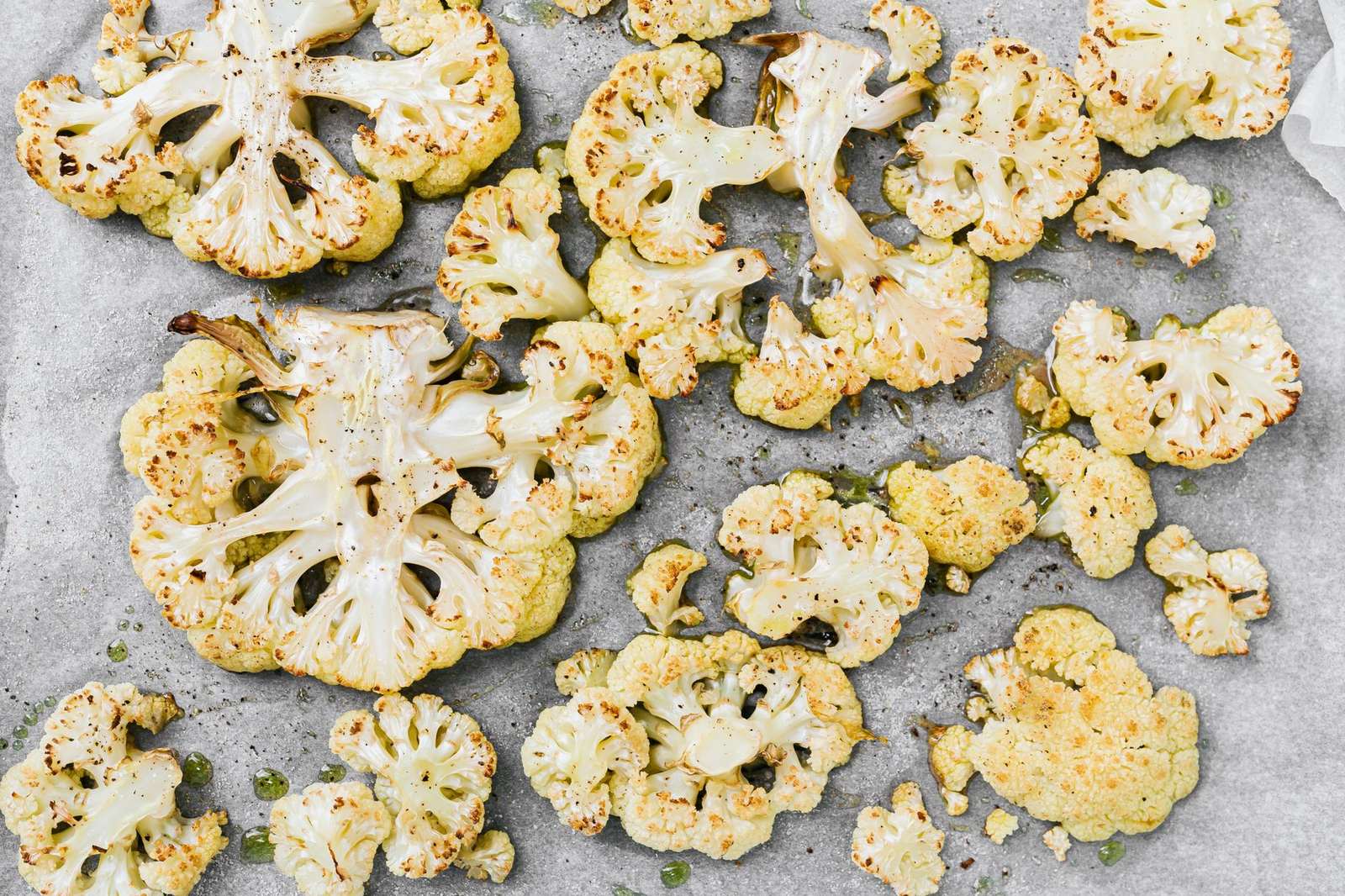
Here is a reliable order of work:
- Preheat the oven fully to the temperature for your cut.
- Toss the vegetables in oil and spread them across the rimmed pan.
- Start the slowest vegetables first, then add quicker ones using the chart.
- Add the chicken with room between the pieces.
- Probe the thickest part of the meat and pull it at your chosen target temperature.
A whole-chicken pan from start to finish
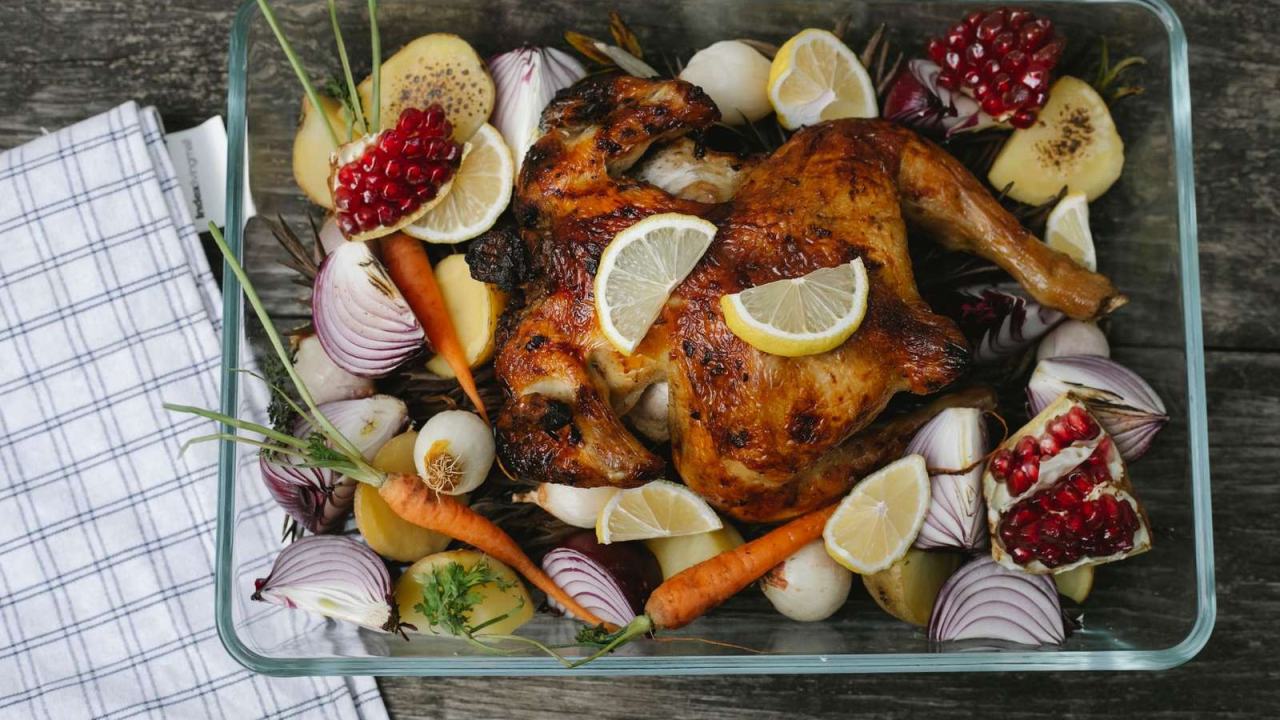
A whole bird shows the same idea at larger scale. Metropolitan Market’s recipe sets a chicken of about 4 pounds over 1 pound of whole carrots, 1 pound of quartered red skin potatoes and a yellow onion.
The chicken is salted at about 1 teaspoon per pound and refrigerated uncovered overnight. It then roasts at 425°F for 60 to 90 minutes, until a probe in the thickest part, away from bone, reads 165°F (Metropolitan Market).
Afterwards the recipe calls for a rest of at least 10 minutes so the juices stay in the meat. The vegetables are then tossed in the pan drippings and finished with a squeeze of lemon (source). The same recipe notes that some cooks remove the bird at 160°F and let carryover heat finish the job.
Salting ahead is optional. The recipe says skipping the overnight rest is fine, though the advance planning gives more fully seasoned meat and skin that dries out before crisping.
Mistakes that spoil a sheet pan dinner
Most failed pans come down to a handful of habits:
- Trusting the clock. Cook times for proteins are only approximate, so ThermoWorks says to rely on temperature for chicken (source).
- Judging by colour. The Alibaba guide calls colour and clear-running juices unreliable and recommends a calibrated thermometer.
- Crowding the pan. The same guide advises leaving 1-inch space between pieces so air can circulate (source).
- Cutting too soon. It suggests resting chicken pieces for 5-10 minutes before slicing so the juices redistribute (source).
Frequently asked questions
Why are my vegetables done before the chicken?
Show answer
Some vegetables, such as asparagus, simply cook much faster than chicken. Hold them back and add them partway through, and let sturdier ones go in first, following the ThermoWorks timing charts.
Should I line the pan with foil or parchment?
Show answer
ThermoWorks advises lining the pan with foil to keep cleanup easy, while Metropolitan Market uses parchment paper for its roast chicken dinner. Either lining works for the idea of fewer dishes (ThermoWorks).
Do I change anything for a convection oven?
Show answer
The Alibaba spice guide says to lower standard temperatures by 25°F on convection settings because the heat circulates more efficiently. Keep probing the meat, since the target temperature does not change.
Is salting the chicken the day before worth it?
Show answer
It can be, if you have the time. Metropolitan Market says a day of advance salting seasons the meat more fully and lets the skin dry so it crisps well, but a shorter rest still works.