Worried your pasta will turn gluey in a single pan? The best one pot pasta recipes lean on starch, not luck: use enough liquid, stir now and then, and pull the pasta while it still has bite.
For more dishes like this, browse the home cooking recipes hub.
| Item | Value |
|---|---|
| Water many pasta boxes recommend | Four to six quarts of boiling water |
| Smaller volumes tested in one experiment | Two quarts and one quart of boiling water |
| Flour with the highest gluten content | Durum semolina flour |
| Literal meaning of al dente | “To the tooth” |
| What surface starch does in hot water | Absorbs water and swells |
The figures come from Science News Explores, and they can change, so check the source before you rely on them.
Why starch makes one pot pasta work
The reason a single pan can produce both tender noodles and a silky sauce is starch. Science News Explores explains that uncooked pasta is made of starch granules embedded in a structure of gluten proteins, as described in its pasta cooking experiment.
As the pasta heats, the granules at the surface take on water and swell, and some of that starch dissolves into the liquid. In a big pot of water you pour away, that starch goes down the drain. In a one-pan dish it stays put and thickens the sauce.
That is the whole trick behind a creamy result without a roux or a spoonful of flour. The liquid you cook in becomes part of the dish, so every ingredient you add to it matters.
How much liquid do one pot pasta recipes need?
Packet advice assumes a large pot. According to the same Science News Explores experiment, most pasta boxes recommend four to six quarts of boiling water. That is far more than a typical one-pan dinner uses.
The experiment asks what happens with two quarts, or even just one quart. It also asks whether the water must boil before the pasta goes in, and frames the larger goal as saving resources, time and energy. Your pan is an extreme version of that question, so treat the liquid level as something to watch rather than a fixed number.
- Too little liquid: the pasta sticks, the top layer stays hard and the sauce turns heavy.
- Too much liquid: the sauce stays thin and the flavour tastes diluted.
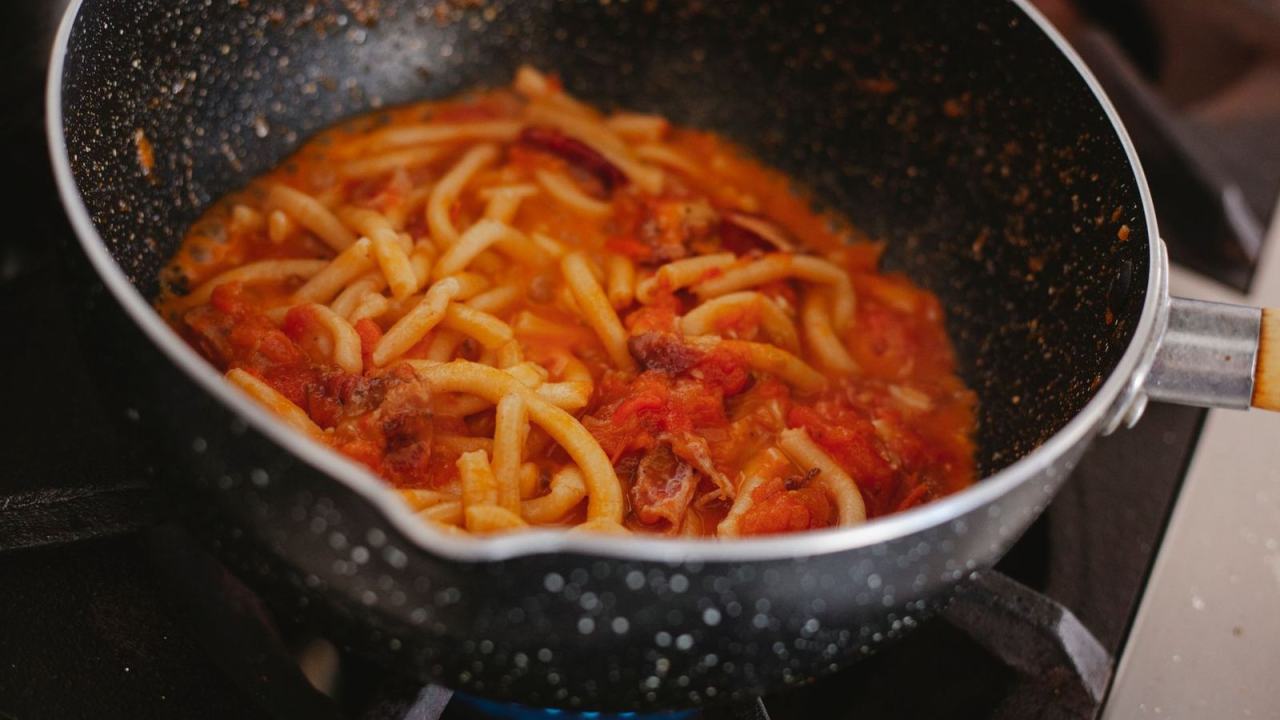
- The sweet spot: the pasta is just covered at the start, and a loose, glossy sauce remains at the end.
If the pan looks dry before the pasta is tender, add a splash of hot water or stock. If it looks soupy at the end, keep it on the heat for a little longer and let the starch do its work.
Getting the al dente texture
The same source describes what a good bite looks like. In pasta cooked al dente, water has reached the centre of the noodle, but the starch in the centre has not soaked up a lot of it. The result, in the experiment’s words, is pasta that is fully cooked but not overly soft.
Al dente means “to the tooth”, which is a handy test: bite a piece and look for a small, firm core that gives way without crunching. Because pasta in a one-pan dish keeps cooking in the hot sauce after you turn off the heat, it pays to test early.
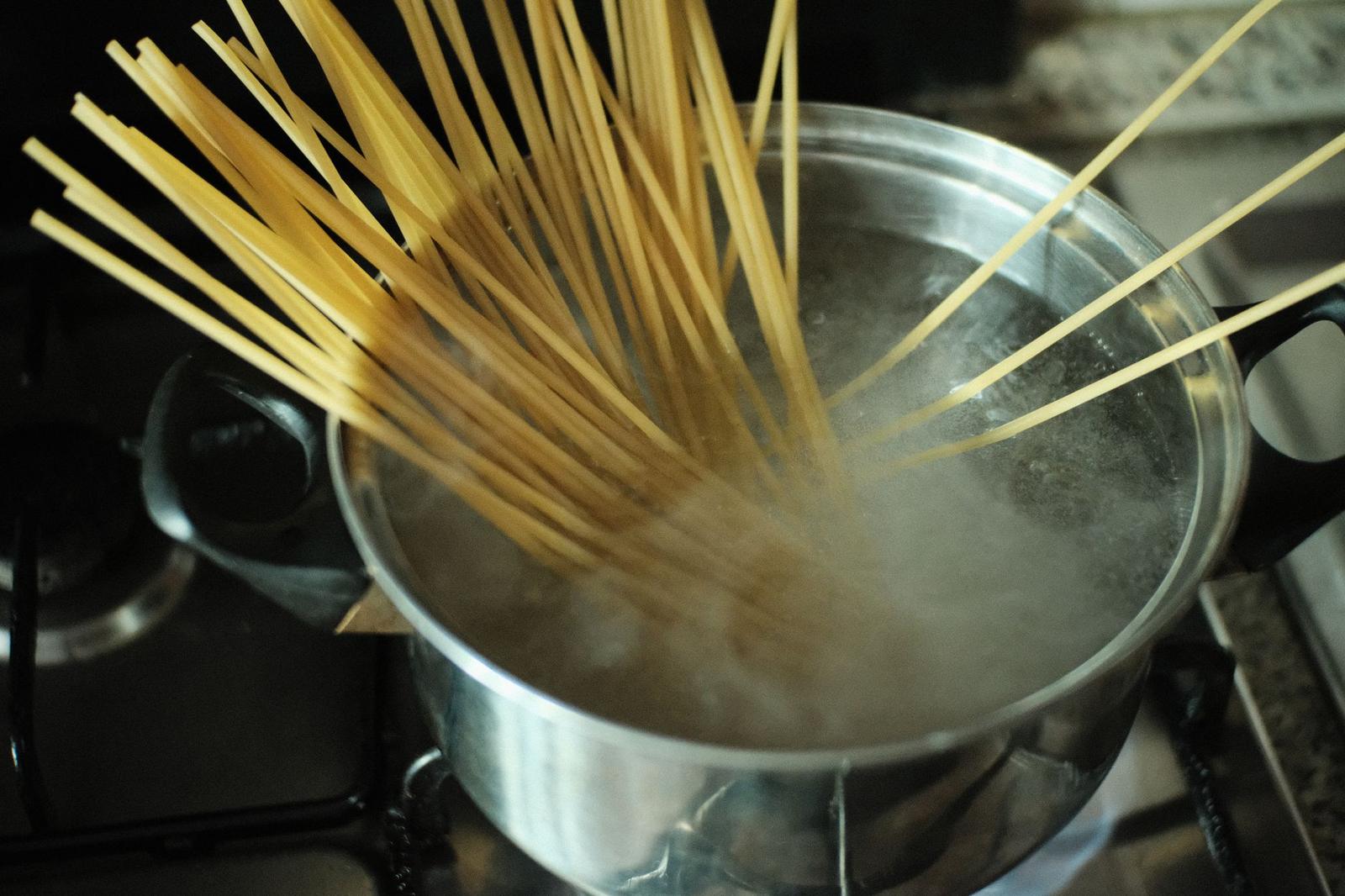
Shape matters too. Pasta made from durum semolina flour has the highest gluten content among the wheat types the source names, which helps it hold together as it simmers and stirs.
A flexible method for a one-pan dinner
You do not need a strict formula to get a dependable dinner. This order of work suits most combinations of vegetables, protein and pasta.
- Soften aromatics such as onion and garlic in a little oil in a wide, deep pan.
- Brown any meat or firm vegetables, then add tomatoes, stock or another cooking liquid.
- Bring the liquid to a simmer and stir in the dry pasta so it is mostly submerged.
- Stir often enough to stop the pasta from sticking to the base, especially near the end.
- Start tasting a few minutes before the packet time and stop when the pasta has a slight bite.
- Finish with soft herbs, cheese or a squeeze of lemon, then rest the pan briefly so the sauce settles.
Quick-cooking greens, peas or spinach can go in at the very end, so they stay bright instead of turning dull and soft.
Where one-pot pasta fits in your week
A single pan means less washing up, which is why one-pot cooking is a staple of busy weeknights. Good Food, from the Sydney Morning Herald, has a dedicated one-pot category, and its recipe collections include “Big flavour, little fuss: 21 spring one-pots for easy weeknights”.
If speed is your main goal, our guide to 30 minute meals gives you more ideas that keep the clock in mind. If you would rather use the oven, the sheet pan dinner recipes page covers a different low-mess approach.
Cooking pasta in its sauce also suits leftovers from the fridge: a few vegetable ends, a spoonful of pesto or a handful of cheese can all go into the pan.
Frequently asked questions
Does the water have to boil before the pasta goes in?
Show answer
The Science News Explores experiment was built around that very question. The part of the article available here does not report its result, so follow the directions on your own packet and watch the texture as it cooks.
Why did my pasta turn gummy?
Show answer
Starch leaves the noodle as it cooks, so an overcooked or crowded pan can end up thick and sticky. Stir more often, add a little hot liquid if it tightens, and test the pasta sooner next time.
Can I use any pasta shape?
Show answer
Short shapes such as penne or shells fit a wide pan more easily than long strands, which may need snapping or bending. Choose one that stays mostly submerged and stir gently so it does not break.
What does al dente actually mean?
Show answer
It is an Italian phrase for pasta that is cooked through but still firm in the middle. Think of a gentle resistance when you bite, never a hard or chalky centre.