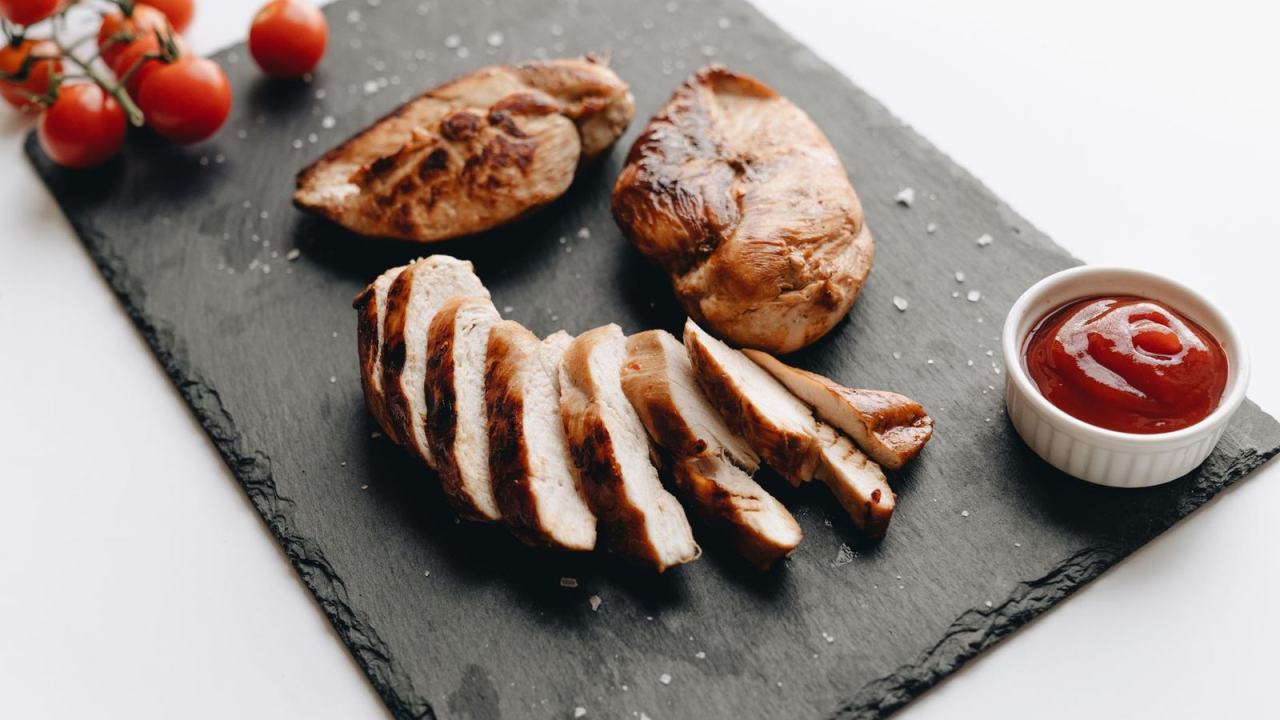
Tired of dry, stringy dinners? The best chicken breast recipes all share one habit: you cook to the safe temperature with a thermometer and stop right there.
For more weeknight ideas, browse the full set of home cooking recipes.
| Item | Value |
|---|---|
| USDA-recommended safe minimum for chicken | 165°F (74°C) |
| Best finishing point for chicken breast | near 165°F |
| Finishing range for thighs, wings and drumsticks | 170-180°F (77-82°C) |
| Brining time for added moisture | 30 minutes |
| Ice-water test for a thermometer | 32°F/0°C |
These figures come from Smoking-Meat.com and Alibaba’s spice guide. Guidance can change, so check the sources before you rely on them.
Why does chicken breast dry out so easily?
Breast meat has very little fat to cushion extra minutes in the heat. Smoking-Meat.com notes that chicken breast is lean and can become dry when cooked too far beyond 165°F, so overcooking is the usual culprit rather than the recipe itself.
Dark meat behaves differently. Thighs, drumsticks and wings carry more fat and connective tissue, and the same source says they often have better texture at 170-180°F (77-82°C).
Three habits quietly turn good chicken dry:
- Trusting the clock instead of a probe, since cooking time is only a rough guideline.
- Cooking breasts that are thick at one end and thin at the other, so the thin end overshoots.
- Slicing straight away, which lets the juices run onto the board.
The temperature rules behind every recipe
The USDA-recommended safe minimum for chicken is 165°F (74°C), measured in the thickest part without touching bone, according to Smoking-Meat.com. For breasts that number is also the best finishing point, so there is no reason to chase anything higher.
A reliable routine looks like this, based on advice from Alibaba’s spice guide:
- Use an instant-read digital thermometer rather than judging by eye.
- Push the probe into the thickest part of the breast, away from bone or fat pockets that give false readings.
- Check more than one spot, because thickness varies across a breast.
- Move the chicken off the heat, let it rest, and watch the reading settle before you carve.
Food safety depends on time as well as temperature, and chicken can be pasteurized below the instant-kill point when it is held there long enough. That only works with a validated method and a well-placed thermometer, so most home cooks are better served by sticking to the standard target, as Smoking-Meat.com explains.
Five chicken breast recipes that stay juicy
Each of these is a method rather than a strict ingredient list, so you can season it to suit your pantry. The thermometer step is the same every time.
Pan-seared cutlets
Slice or pound the breast so it is an even thickness, season it, and sear it in a hot pan until golden. Thin cutlets cook faster, and the Alibaba guide advises checking their temperature early.
Oven-baked breasts with a spice rub
Coat the breasts in a dry rub of your choice and bake them on a tray. A short brine of 30 minutes in a saltwater solution helps with moisture retention, according to Alibaba’s spice guide.
Grilled marinated breasts
Marinate the chicken, grill it, and keep the lid and oven door closed as much as you can. Opening the oven or grill frequently drops the temperature, so probe only when you need to.
Poached and shredded chicken
Gentle poaching in seasoned liquid gives you tender strands for salads, tacos and sandwiches. Test the thickest breast before you lift the pot off the stove.
Quick stir-fried strips
Thin strips cook in moments, so add them late and test the largest piece. Pull the whole batch as soon as that piece is done.
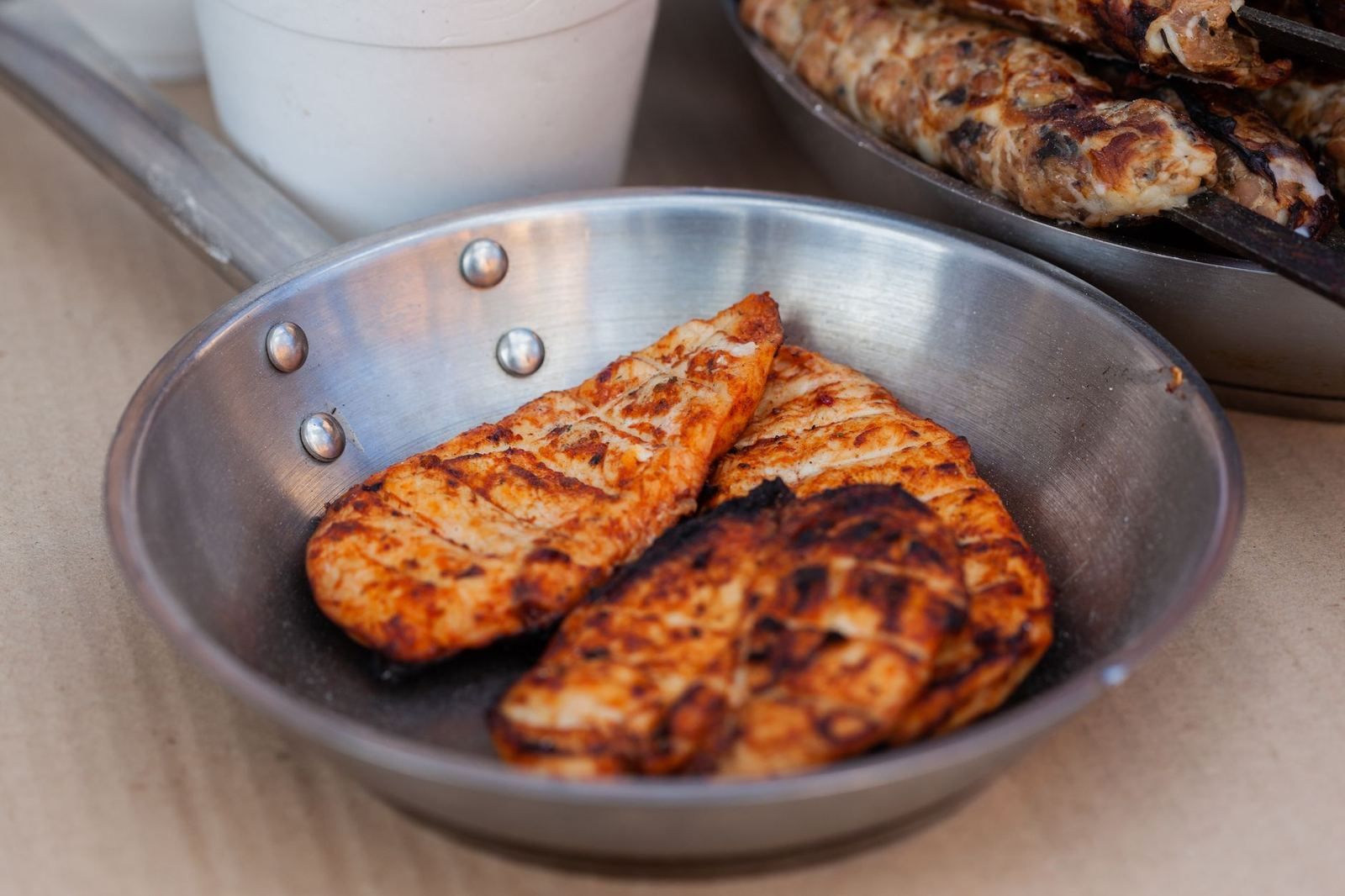
Prep and resting habits that protect moisture
Good prep does half the work before the heat is even on. Pounding the meat evenly creates uniform thickness, which gives consistent cooking from edge to edge.
Resting matters just as much. The Alibaba guide lists ignoring resting time as a common error, because cutting immediately causes juice loss and inaccurate readings.
Carryover cooking is the reason a rest helps. After chicken leaves the heat, its internal temperature may keep rising as warmth moves from the hotter outside toward the centre. The amount varies, so use your thermometer to see what really happens instead of guessing.
Planning chicken breast through your week
Cook a few extra breasts on one evening and you can use them across several meals. Sliced cold chicken suits lunches, and shredded chicken works in wraps.
If you want a hands-off option, try these sheet pan dinner recipes, where the chicken roasts beside the vegetables. When you are feeding a mixed table, a few vegetarian dinner recipes can balance the week.
Fancy a change from breast? Thighs are more forgiving, and you can take them to a higher finish than breasts without drying them out.
Frequently asked questions
Is pink chicken breast always undercooked?
Show answer
No. Fully cooked chicken can still look pink near the bones, so the colour alone cannot settle it. Let the thermometer reading decide.
Can resting finish the cooking for me?
Show answer
Not on its own. Reaching a lower temperature and then resting is not enough by itself, because the meat must stay at the target for the full time a validated method requires, per Smoking-Meat.com. If you doubt the process or your thermometer, take the chicken to 165°F (74°C).
How do I check that my thermometer is accurate?
Show answer
Test it in ice water, which should read 32°F/0°C, and repeat that check regularly. The Alibaba guide recommends this routine.
Should I cook breasts and thighs the same way?
Show answer
They share the same safe minimum, but the meat is different. Breast stays moist near the minimum, while dark meat rewards extra heat to soften its connective tissue.