You want homemade salad dressing recipes that taste fresh and don’t turn into oil slicks. Start with three parts oil to one part vinegar, add a little mustard, and shake hard in a jar.
You can find more kitchen basics in the food and drink guide.
| Item | Value |
|---|---|
| Classic oil-to-vinegar ratio | 3:1, oil to vinegar |
| Oil mix for a fridge-friendly dressing | 2:1, extra-virgin olive oil to vegetable oil |
| A traditional vinaigrette stays mixed | No more than an hour |
| Make-ahead vinaigrette keeps | Up to a week in the fridge |
| Dressing with garlic, herbs or citrus juice keeps | Around 3 days |
| Rest time after chilling | 30 minutes at room temperature |
These figures come from America’s Test Kitchen and an EatingWell storage explainer on AOL. They can change as testing and guidance are updated, so check the source before you rely on them.
Start with the ratio, then adjust
The classic ratio for a vinaigrette is 3:1, meaning three parts oil to one part vinegar, according to America’s Test Kitchen.
The Live Eat Learn guide gives a wider range: 3 to 4 parts oil, 1 part acid, and a little emulsifier to bring it together. It also leans closer to 2.5 to 1 when you want more tang. For about a cup of dressing, it suggests three-quarters of a cup of oil with a quarter cup of vinegar.
Once you have the ratio, pick your ingredients from these lists, which follow the same guide:
- Acid: lemon juice, lime juice, or red wine, white wine, balsamic, apple cider or rice vinegar.
- Oil: extra-virgin olive oil, or avocado, walnut, sunflower, coconut or sesame oil.
- Flavorings: citrus zest, fresh or dried herbs, cracked black pepper and sea salt, plus garlic or shallots if you like a sharper bite.
How to mix a dressing that stays together
A homemade vinaigrette typically lasts no more than an hour before the oil and acid start to separate, as America’s Test Kitchen describes it. A few habits slow that down. The steps below follow the Live Eat Learn method.
- Whisk the vinegar, salt, pepper and any seasonings together first.
- Add a small spoonful of mustard or another binder so the oil and vinegar hold together longer.
- Pour in the oil in a slow, steady stream while whisking constantly.
- Or skip the whisk and shake the dressing in a jar, or blend it, until creamy.
- Start with less vinegar than you think you need, then add more to taste.
Dumping all the oil in at once is the step cooks skip most often, and it is the one that matters most for a smooth, stable dressing.
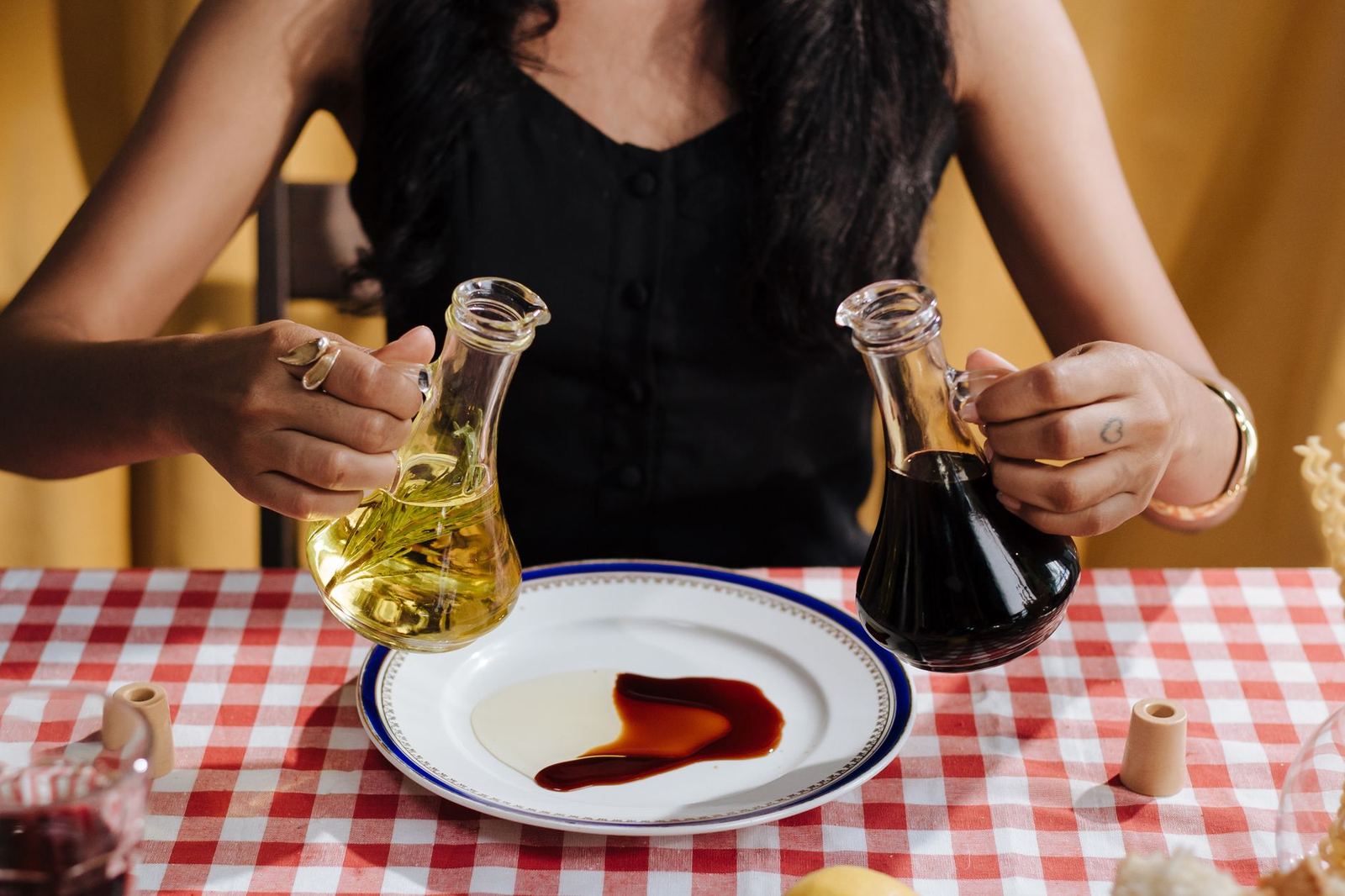
A make-ahead version that lasts
An America’s Test Kitchen editor developed a make-ahead vinaigrette that lasts up to a week in the fridge, according to the test kitchen’s write-up. It uses three small changes to a basic dressing:
- Two oils: a 2:1 ratio of extra-virgin olive oil to vegetable oil kept the dressing smooth and pourable straight from the fridge.
- Two emulsifiers: equal amounts of mustard and milder mayonnaise, because mustard alone needs so much that its flavor takes over.
- A stabilizer: a tablespoon of light molasses. Skip the dark, smoky blackstrap kind, which tastes too strong and bitter.
To mix it, combine the vinegar, molasses, mustard, mayonnaise and salt in a jar with a fork, then add the oils in batches and shake after each addition. The finished dressing should look glossy and lightly thickened, with no pools of oil on top.
Olive oil firms up in the cold because its saturated fat molecules lock together and form crystals. That is why blending in a polyunsaturated oil such as vegetable oil helps, as the same article explains.
Flavor variations to try
The Live Eat Learn guide lists its favorite combinations in the order of acid, oil, emulsifier and flavor add-in:
- Balsamic: balsamic vinegar, extra-virgin olive oil, Dijon mustard and minced garlic.
- Red wine: red wine vinegar, extra-virgin olive oil, Dijon mustard and minced shallot.
- Sesame ginger: rice vinegar, sesame oil, tahini and minced ginger.
- Lemon: lemon juice, extra-virgin olive oil, mustard and fresh thyme.
Fresh herbs make the lemon and red wine versions sing, so it helps to read up on how to store fresh herbs before you shop. For something to sip alongside the salad, browse the mocktail recipes.
Do homemade dressings need to go in the fridge?
In general, refrigerate a homemade vinaigrette, according to the EatingWell article. The exception is a dressing made only of shelf-stable ingredients such as oil, vinegar, salt and pepper.
Food technology expert Tamika Sims adds a safety reason: if you add vegetables or herbs, the potential growth of Clostridium botulinum becomes a factor. Fridge storage is the best way to keep those spores in check, per the same article.
Garlic is a special case. Dr. Linda Harris of the U.C. Davis Western Institute for Food Safety and Security told America’s Test Kitchen that a garlic vinaigrette doesn’t present a botulism risk because the acid in vinegar inhibits bacterial growth, though she still said it can be stored refrigerated for added safety, in the test kitchen’s garlic safety note.
For freshness, plan on around 3 days for a homemade dressing with fresh or cooked vegetables like garlic, herbs and citrus juice, according to chef Ann Ziata in the EatingWell piece.
Garlic flavor changes faster than safety does. A simple vinaigrette of 1/3 cup of vinegar, 1 cup of oil and 1 teaspoon of minced garlic lasted only 24 hours in the fridge before the garlic tasted pickled, based on the same garlic test.
When a chilled dressing turns solid, let it sit at room temperature for 30 minutes to restore the emulsion, as the EatingWell article advises.
Fixes for common dressing problems
- It separated in the jar: that is normal in the fridge, according to Live Eat Learn, so shake it in a sealed jar or whisk it again before serving.
- The mustard flavor is too loud: swap part of it for mayonnaise, which is milder but still binds the dressing.
- It tastes too sharp: add the vinegar gradually next time and stop when the tang suits you.
- The garlic tastes pickled: make a smaller batch and finish it within a day.
Most of these problems come down to the same two levers, ratio and technique, so adjust one thing at a time and taste as you go.
Frequently asked questions
Why does my dressing keep separating?
Show answer
Oil and vinegar don’t stay blended by themselves. An emulsifier coats the surface of water droplets so they can’t merge and stay suspended in oil, as America’s Test Kitchen explains.
Can I leave dressing on the counter?
Show answer
A very simple dressing may be fine, but anything with perishable ingredients should not be. Chef Ann Ziata says to always refrigerate vinaigrettes with eggs, heavy cream, citrus juice, fresh herbs or vegetables, and that mustard, honey or tahini alone likely stay safe unrefrigerated while tasting best cold, per EatingWell.
Which emulsifier should I choose?
Show answer
Live Eat Learn recommends honey, Dijon, tahini, mayonnaise or egg yolks, and also lists mashed avocado, miso, tomato paste, agave and maple syrup as extra options, in its dressing guide.
Is it better to shake, whisk or blend?
Show answer
Any of the three works. The make-ahead recipe is simply shaken in a jar, according to America’s Test Kitchen, while the Live Eat Learn author would pick a blender if forced to choose.