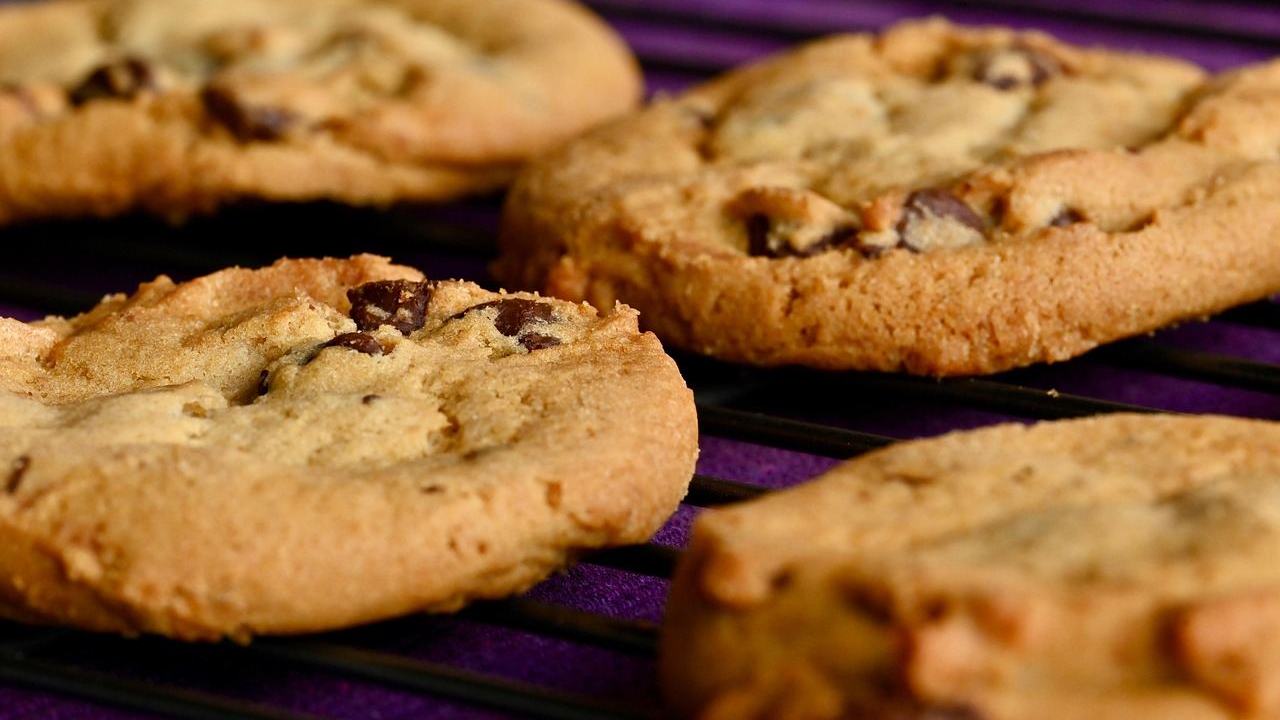
Want a chocolate chip cookies recipe that turns out the way you like? Start with the classic Toll House base, then tweak flour, fat, leavening and chill time to get chewy, crispy or thick.
If you want more ideas after this one, browse the baking recipes collection for other bakes.
| Item | Value |
|---|---|
| Oven setting for browner tops | Higher than 350 degrees Fahrenheit |
| Caramelization starts | Above 356 degrees |
| Freezer time for thicker cookies | 30 to 60 minutes |
| Chill time for deeper flavor | At least 24 hours |
| Chill time with a clear effect on spread | 30 minutes |
| Leavening for crisp edges and a soft center | 1/4 teaspoon baking powder and 1/4 teaspoon baking soda |
These figures come from NPR’s cookie science report and King Arthur Baking’s chilling test. Figures can change, so check the source before you rely on them.
Start with the classic Toll House base
The classic Nestle Toll House chocolate chip cookie recipe is the base that NPR’s September 4, 2014 piece used for its texture tips, as NPR’s report explains. The advice drew on Kendra Nyberg, a bioengineering grad student who co-taught a class called Science and Food at the University of California, Los Angeles, and on cookbook author Tessa Arias.
This page does not reprint exact ingredient amounts, because the sources describe changes to the recipe rather than listing it. Use your preferred version of the classic recipe, then apply the adjustments below one at a time.
Nyberg’s point is that every ingredient has a job in the texture and shape of a cookie. Once you know which lever does what, you can bake the cookie you actually like instead of the one the recipe happens to give you.
If measuring and mixing still feel new, the guide to baking for beginners is a good place to build confidence first. When you want another simple bake afterwards, this banana bread recipe makes a friendly next step.
How do you get chewy, crispy or thick cookies?
NPR’s summary of the expert tips treats texture as a set of swaps, and each one is easy to try. The main options from the NPR report are:
- Chewy: use bread flour in place of all-purpose flour.
- Crispy with a soft center: use 1/4 teaspoon baking powder and 1/4 teaspoon baking soda.
- Thick and less crispy: freeze the batter for 30 to 60 minutes before baking.
- Cakey: use more baking soda.
- Store-bought style: trade the butter for shortening.
Freezing works because it solidifies the butter, so the dough spreads less in the oven. That is why a frozen batter bakes into a taller, softer cookie.
For the cakey version, Nyberg explains that baking soda releases carbon dioxide when heated, which makes cookies puff up. More soda therefore means more lift and a lighter crumb.
Shortening gives a texture closer to packaged cookies, but Arias notes that it reduces some flavor. Her middle path is to use half butter and half shortening, according to NPR.
Why does chilling the dough matter?
Chilling is the simplest lever you have. In King Arthur Baking’s May 17, 2015 test, bakers used one batch of chocolate chip dough, baked some right away, then kept baking from the same dough over the next 10 days.
Dough chilled for just 30 minutes spread less than dough baked straight away, and the unchilled cookies also browned less. The test authors say the result applies to other plain drop doughs too.
After that first step, diminishing returns set in. The longer you chill, the smaller the changes become, though the cookie keeps evolving very gradually.
If flavor is your goal, NPR’s report says Arias found that chilling the dough for at least 24 hours before baking deepens all the flavors. Plan this one a day ahead.
Oven temperature and browning
Golden color comes from caramelization, which the TEDEd video cited by NPR says occurs above 356 degrees. For a nicer tan, the tip is to set the oven higher than 350 degrees Fahrenheit.
An oven at exactly 350 degrees Fahrenheit sits just under that threshold, so tops can stay pale. Treat the change as a small nudge rather than a big jump, and watch the first tray closely.
Chilling interacts with color too. Because the unchilled dough in the King Arthur test browned less, a rested dough may give you a deeper tone on top without touching the dial.
Flavor and appearance tweaks
A few smaller changes shift taste and looks rather than texture. The NPR tips include these:
- Butterscotch notes: use 3/4 cup packed light brown sugar instead of the same amount of combined granulated and light brown sugar.
- Neater, uniform cookies: add one ounce of corn syrup and one ounce of granulated sugar.
- Balanced shortening swap: keep half the butter so flavor does not drop.
Because the sources test each tip on its own, the safest method is to change one thing per batch. Keep notes, and you will soon land on your own house version of the classic.
Frequently asked questions
Do I have to chill cookie dough?
Show answer
No, but it changes the result. King Arthur Baking found that chocolate chip dough rested in the fridge baked differently from dough baked at once, and the finding extends to sugar cookies and snickerdoodles, per its chilling test.
Why are my cookies spreading too much?
Show answer
Soft, warm fat melts fast and lets the dough flatten. Both freezing and refrigerating the dough kept cookies thicker in the sources, and NPR’s report links this to firmer butter.
Will my cookies brown properly at 350 degrees Fahrenheit?
Show answer
They may come out lighter, since the browning reaction starts above 356 degrees according to the NPR piece. A slightly hotter oven is the suggested fix.
Can I combine several tweaks in one batch?
Show answer
The sources describe each adjustment separately and do not test combinations. Starting with a single change keeps cause and effect clear, and you can stack more once you trust the first.