Baking for beginners looks simpler once you break it down: a few good tools, scales you trust and a handful of core techniques. Learn those first, then bake one easy recipe and build from there.
Once the basics feel familiar, the wider set of baking recipes gives you plenty of projects to practise on.
| Item | Value |
|---|---|
| Tools in a beginner starter kit | 10 tools |
| Core techniques worth learning | 10 techniques |
| Skills of a confident baker | five skills |
| Size of the starter square and round tins | 20cm (8″) |
These figures come from Kitchen Mason’s beginner guide and New Gen Baker’s beginner guide. Published lists can change, so check the sources before you rely on them.
Which baking tools do you actually need?
Kitchen Mason recommends 10 tools for a new baker, and none of them is exotic, as its beginner guide shows. Here is the starter list:
- A square loose bottom baking tin
- A round loose bottom baking tin
- A large non-stick baking tray
- Digital weighing scales
- An electric hand whisk
- Two or three glass mixing bowls
- A cooling rack
- Measuring spoons
- Two or three rubber spatulas
- A hand whisk
Both tins in that starter list are 20cm (8″), one square and one round, according to the same Kitchen Mason guide. Check the tin size a recipe asks for before you start, because a different size changes how the batter sits.
Quality matters more than quantity. The guide argues that if you keep buying cheap equipment that breaks, spending a little more can save you money in the long run, as Kitchen Mason explains.
A second beginner guide, from New Gen Baker, adds a few more basics. A wooden spoon is durable and handles thick dough, a rolling pin flattens dough or pie crust, a sieve acts as a sifter for dry ingredients, and one good chef’s knife is enough for baking.
If you bake often, Kitchen Mason suggests upgrading the electric hand whisk to a stand mixer, which saves time and effort. You do not need that on day one, and the guide treats it as an upgrade rather than a requirement.
Measuring ingredients without guesswork
Baking rewards accuracy, and digital scales are the easiest way to get it. Kitchen Mason’s measuring tips boil down to a short routine:
- Stand your mixing bowl directly on the scales, which means fewer dishes to wash.
- Zero the scales with the tare function.
- Add the first ingredient, tare again, then add the next.
- Pick metric or imperial at the start and stay with it all the way through the bake.
Small details matter too. A level tablespoon is not the same as a heaped one, so use proper measuring spoons rather than cutlery, as the Kitchen Mason guide points out.
If you prefer cups, New Gen Baker says to buy two varieties: one set for measuring dry ingredients and the other for wet.
When you run out of something mid-recipe, read up on baking substitutions before improvising, because some pairs of ingredients behave very differently in the oven.
Core baking techniques, explained
Recipe wording can feel like another language. Kitchen Mason’s guide explains 10 techniques in plain terms, and it is worth skimming them before your first bake (source):
- Creaming: beating butter and sugar together until light and fluffy.
- Folding: a gentle mixing method that adds ingredients without deflating them.
- Whisking: beating ingredients together quickly with a wire whisk.
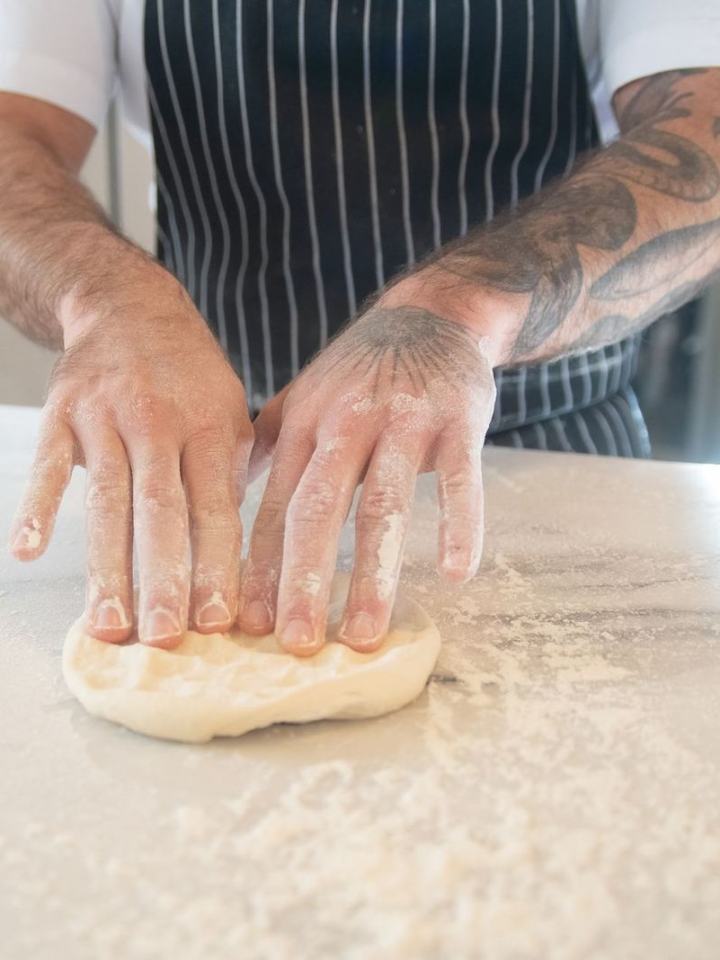
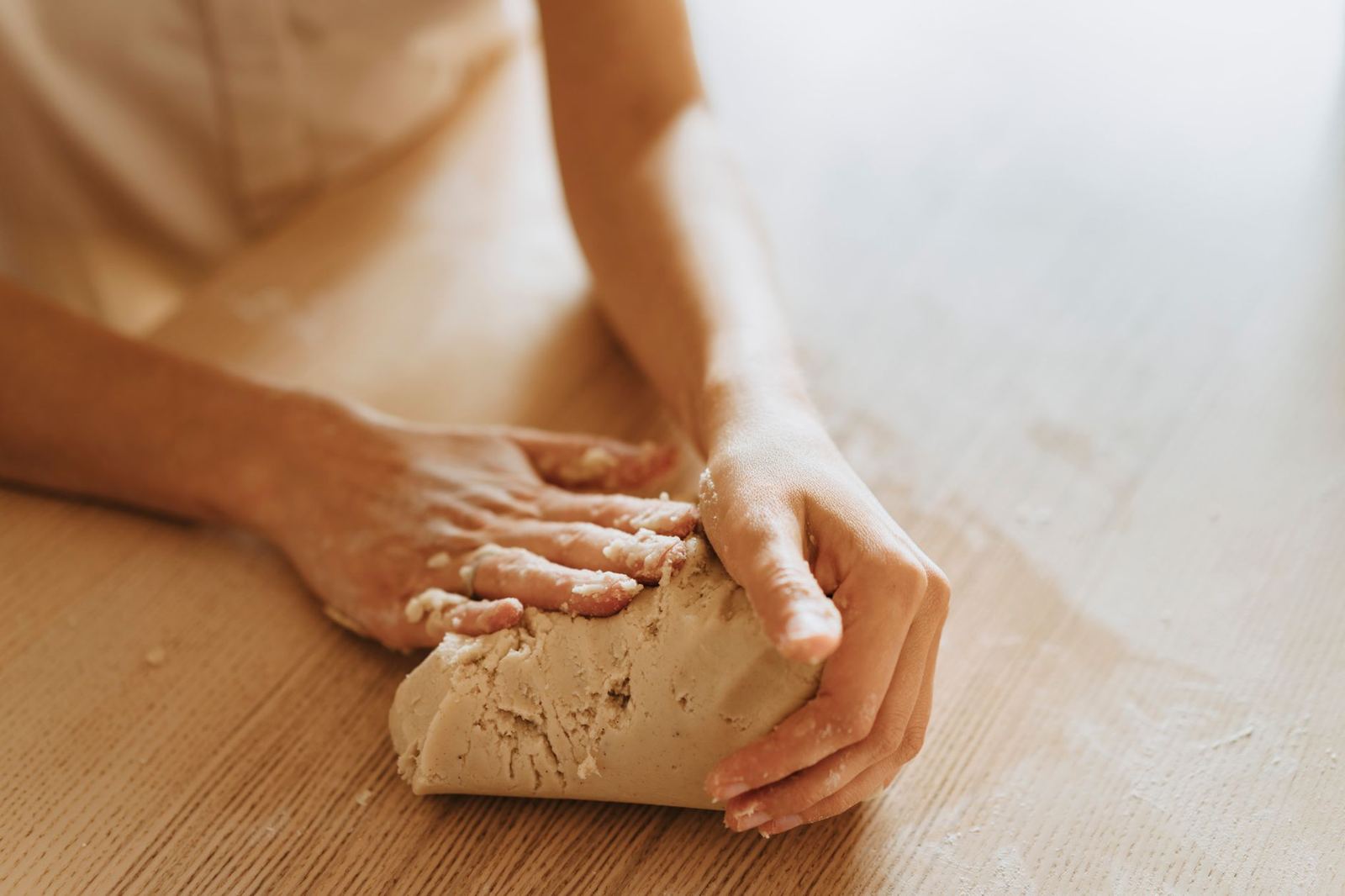
- Kneading: stretching and folding dough to develop the gluten and a smooth, elastic texture.
- Rolling: flattening dough with a rolling pin to the thickness you want.
- Cutting: shaping dough with a knife or cookie cutter.
- Greasing: coating a tin or sheet with butter, oil or non-stick spray.
- Sifting: passing dry ingredients through a fine mesh sieve to remove lumps.
- Blind baking: pre-baking a pastry case before the filling goes in.
- Brushing: applying egg wash, melted butter or another liquid to the surface of a bake.
Creaming deserves special attention, since it is often the first step in cookies and cakes, according to the same guide.
A few glossary words also come up constantly. Crumb is the inside texture of a bake, proofing is letting bread dough rise before baking, docking means pricking pastry with a fork so it does not puff up, and a leavening agent is anything that makes dough or batter rise, such as yeast or baking powder.
What each basic ingredient does
Knowing the job of each ingredient helps you troubleshoot. New Gen Baker gives a clear rundown of the essentials:
- Flour: all-purpose flour is the all-around option, while whole wheat flour is typically used for breads and is a good source of fiber.
- Leaveners: baking soda, baking powder and yeast all make bakes rise, but they work differently.
- Eggs: their most important function is to provide structure.
- Fats: butter gives any baked good flavor and adds moisture.
- Sweeteners: granulated sugar appears in most recipes, and brown sugar is granulated sugar with molasses mixed in.
- Salt: like sugar, it adds flavor.
The one pairing to remember is baking soda versus baking powder. The same guide warns you cannot simply substitute one for the other, because soda needs something acidic to react while powder already contains an acid (source).
Habits that make a beginner better
New Gen Baker names five skills that every baker develops, whether a newcomer or an expert, in its beginner guide:
- Preparation and organisation
- Attention to detail
- Hand-eye coordination
- Patience
- Creativity
Preparation is the easiest to start with. Read each step of the recipe before you begin, then check you have everything you need so you never discover a missing ingredient halfway through.
Detail work comes next. Check whether your ingredients are expired and whether the recipe calls for baking soda or baking powder.
On patience, the guide is encouraging: there are no shortcuts to becoming a great baker, and all master bakers were beginners at one point. Decorating skills such as icing and frosting simply require practice, and experimenting with flavours is the reward once you feel confident (source).
Choosing your first recipe
Pick something that practises the techniques above without needing special equipment. Cookies are a good fit because they use creaming, a mixing bowl, a tray and a cooling rack, all from the starter list.
The chocolate chip cookies recipe is a natural first project for exactly that reason.
Before you start, run through a quick checklist:
- Read the whole recipe once, start to finish.
- Weigh every ingredient with your scales.
- Grease or line the tray if the method says so.
- Keep the cooling rack ready for when the tray comes out.
Frequently asked questions
Do I need a stand mixer to begin baking?
Show answer
No. A whisk you hold in your hand and a sturdy spoon will carry you through your first few bakes, and a stand mixer only makes sense once baking becomes a regular habit.
Can I use baking soda when a recipe says baking powder?
Show answer
Not as a straight swap. The two react in different ways, so changing one for the other without adjusting the rest of the recipe can leave the bake flat or oddly flavoured.
What is the difference between folding and whisking?
Show answer
Whisking works air into a liquid or batter with energetic beating, whereas folding is slow and careful so that delicate mixtures such as whipped cream or egg whites keep their lightness.
What if my first bake does not turn out well?
Show answer
That is normal. Note what went differently, such as the measuring or the tin you used, and try again, because skill grows with repetition.