Wondering why your homemade pizza dough feels stiff one night and sticky the next? The cause is usually hydration, the water-to-flour ratio. Weigh both, begin with a firmer dough and adjust from there.
If you like bread projects, the baking recipes hub gathers more guides like this one.
| Item | Value |
|---|---|
| Hydration example | 1000 grams of flour and 600 grams of water give 60% hydration |
| Neapolitan-style range | 60 to 65% |
| Detroit-style range | 70 to 80% |
| Beginner-friendly starting point | 60% |
| Very high hydration | 75% or even 80% |
These figures come from Ooni’s hydration guide and Fontana Forni USA’s hydration article. They can change, so check the source before you rely on them.
What hydration means for homemade pizza dough
Hydration is the amount of water in a dough in relation to the amount of flour, expressed as a percentage. Ooni gives the classic example: a recipe with 1000 grams of flour and 600 grams of water makes a dough with 60% hydration.
Bakers describe this with baker’s percentages. Flour is always stated as 100%, and every other ingredient is worked out as a percentage of the flour weight. In Gozney’s explanation, 500g of flour needs 250g/ml of water to make a 50% hydrated dough.
The method earns its place for three reasons, all listed by Gozney:
- Every ingredient is weighed, so you work with precision using only one unit of measure.
- It is quite easy to scale a formula up or down.
- It lets bakers share a common language.
Once you think in percentages, a recipe stops being a fixed list and becomes a starting point you can tune.
Which hydration should you pick for your style?
There is no single right answer. Fontana Forni USA puts it plainly: there is no “best” pizza dough hydration for a home oven, only different textures. Here is how the common levels behave:
- 50-57%: more typical of focaccia, ciabatta and brioche than pizza, though some Sicilian-style doughs use it (Ooni).
- 60%: the most common figure in beginner recipes because the dough is easier to work with, and it bakes into a crispier crust (Ooni, Fontana Forni USA).
- 65%: slightly tacky and a little more difficult to work with (Ooni).
- 70%: very soft, stretchy and quite sticky, with an airy, light crust and a crispy bottom (Fontana Forni USA).
- 75% or even 80%: possible, but it calls for advanced handling and plenty of practice (Fontana Forni USA).
Style matters too. Ooni notes that Detroit-style pizza has a fairly high moisture content between 70 to 80%, while Neapolitan-style generally sits at around the 60 to 65% mark.
More water also changes how the dough behaves. Gozney says higher hydration makes the dough rise faster, and it softens the gluten strands, which lets larger air pockets form in the crust.
How to make homemade pizza dough step by step
This guide covers the water-to-flour logic. Take yeast, salt and timing amounts from a tested recipe, then use the steps below to keep the process consistent.
- Weigh the flour first, then calculate the water as a percentage of that flour weight.
- Mix flour, water, yeast and salt until no dry flour remains.
- Knead or fold the dough until it turns smooth and elastic. A wetter dough will feel softer and stretchier than a firm one.
- Let the dough rise. Judge it by how it looks and feels, because a wetter dough rises faster, according to Gozney.
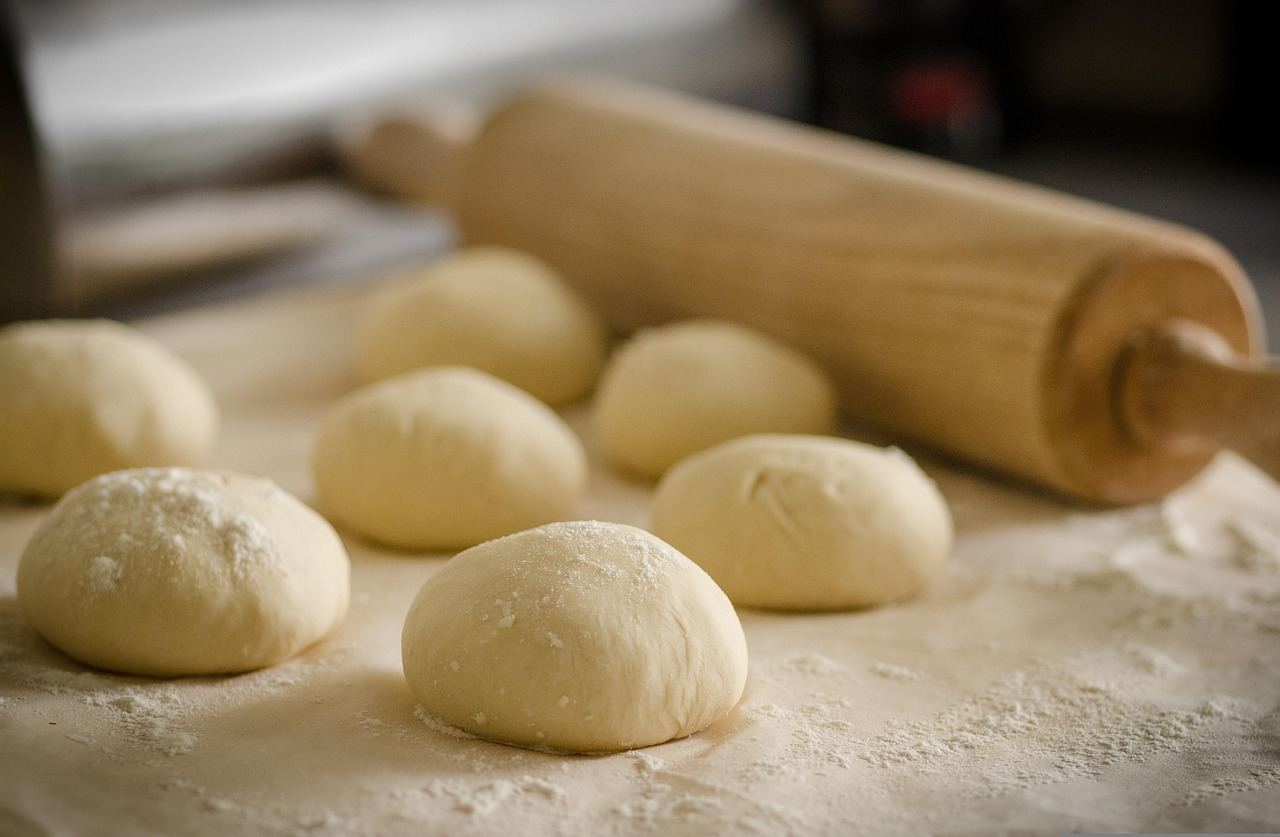
- Divide the dough into balls and give them a rest before shaping.
- Stretch each ball by hand, add toppings and bake in your oven.
Write your flour and water weights down every time. When a batch turns out well, you can repeat it exactly, and when it does not, you know which number to change.
Handling sticky, high-hydration dough
When you raise the hydration, the dough gets stickier and harder to handle, as Gozney explains. These tips from Fontana Forni USA help:
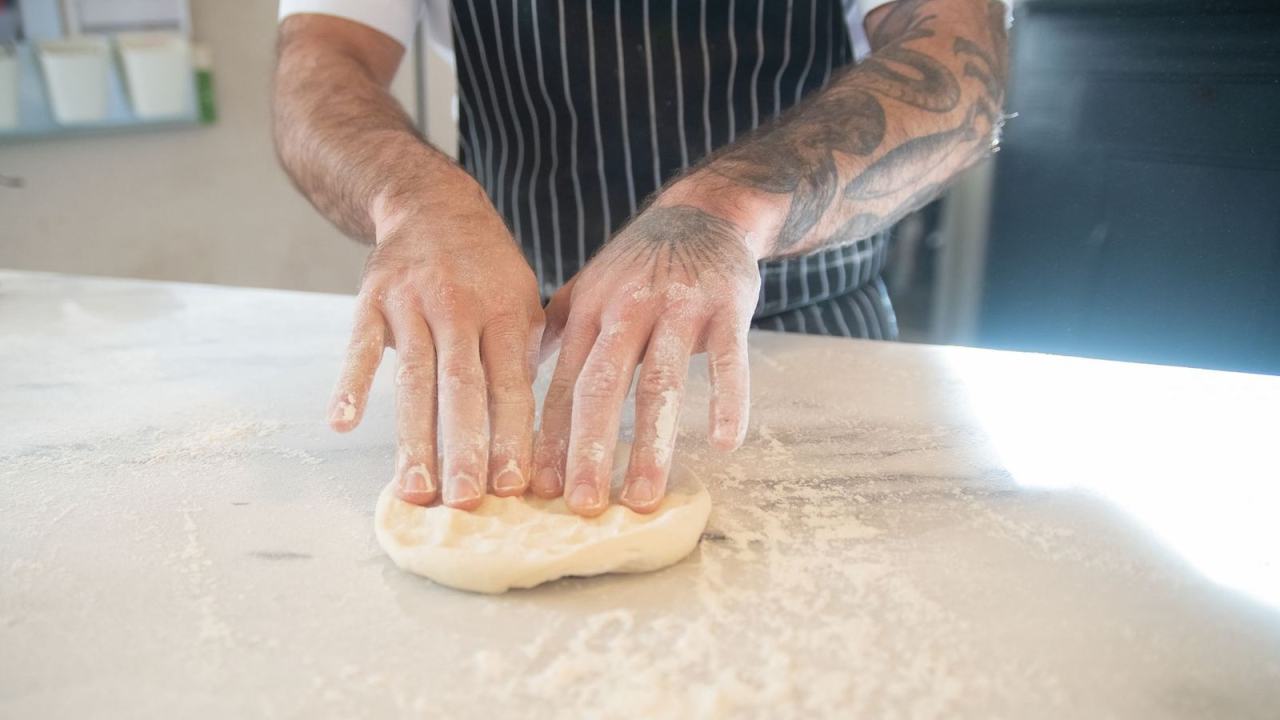
- Flour your work surface well so the dough does not grab your hands and tools.
- Try wet hands instead of extra flour, which can manage the dough better.
- Flip your proofing container to release the dough balls without losing structure.
- Stretch and bake in a pan if handling the dough freeform feels overwhelming.
If weighing and handling dough by feel appeals to you, sourdough bread for beginners is a natural next project once you are comfortable with flour and water ratios.
Do oil, milk and eggs count toward hydration?
In baking, hydration refers specifically to the ratio of water to flour. Fontana Forni USA says olive oil and butter are fats, not water-based, so they do not contribute to hydration directly, although they do tenderise the dough.
Milk is different because it is mostly water. The same source says milk contains about 87% water, so swapping it for water changes the final texture, and you would count only its water share. Milk or eggs are very rarely used for pizza dough, so this seldom matters in practice.
If you want a sweeter, soft-dough project instead of a pizza night, the cinnamon rolls recipe is worth a look.
Frequently asked questions
What hydration is best for a first attempt?
Show answer
Go with 60%. That dough is not sticky and holds together, so it forgives rough shaping while you build confidence, according to Ooni.
Do I have to weigh my ingredients?
Show answer
Weighing is the easiest route to repeatable results. Recipes written in volumes are harder to compare, while baker’s percentages let you compare recipes quickly, as Gozney describes.
Why does my wet dough stick to the peel?
Show answer
Soft, sticky dough easily clings to the peel when you move it from the work surface to the oven, according to Gozney. A firmer dough or baking in a pan avoids the problem.
How do I make a bigger or smaller batch?
Show answer
Keep the percentages and multiply the proportions. Because flour is the fixed reference point, every other ingredient scales along with it, as described by Gozney.