Starting sourdough bread for beginners feels daunting when you’re staring at a jar of flour and water. Mix equal parts flour and water, feed it until it doubles, then bake your first loaf.
If you like bread projects, you can find more ideas among the site’s baking recipes.
| Item | Value |
|---|---|
| What a starter needs | Flour, water and time |
| Starting ratio | Equal parts flour and water |
| Baking-ready rise | Doubles within 6 to 8 hours of feeding |
| Starter to keep back after measuring | 113g |
| Rise in a naturally leavened loaf | Starter only, no commercial yeast |
These figures come from King Arthur Baking’s Bake guide and its beginner sourdough post. They can change, so check the source before you rely on them.
What is sourdough, exactly?
Sourdough refers both to the bread and to the starter used to make it, as King Arthur Baking explains in its sourdough guide. That double meaning trips up a lot of new bakers, so keep it in mind when a recipe says “sourdough” and means the jar on your counter.
A starter begins with flour and liquid. According to the same guide, it can range from a stiff starter made entirely with rye flour and water to a liquid batter of milk and cornmeal.
When flour is mixed with liquid, friendly lactobacilli and wild yeast from the flour and your surroundings start working together, per the guide. Those tiny living creatures generate byproducts that cause bread to rise, which is why a jar of flour and water can leaven a loaf.
Making a starter from scratch
You don’t need special gear to begin. The beginner post says you only need three things: flour, water, and time.
The routine is simple and repetitive:
- Combine equal parts flour and water in a clean jar.
- Let the mixture rest at room temperature.
- Regularly discard some of it and refresh it with more flour and water.
- Repeat over several days while the mixture builds a flourishing community of microorganisms.
The same post notes that a scale is an incredibly helpful tool for making sourdough from scratch. Weighing flour and water makes “equal parts” easy to repeat each day, so your starter behaves more predictably.
How do you know your starter is ready to bake with?
There is a difference between a starter that is merely being kept alive and one that is ready for a loaf. To get a baking-ready starter, King Arthur Baking says to feed it until it doubles in size within 6 to 8 hours of being fed, looking bubbly and vigorous with a sharp, clean aroma, as described on its Bake page.
Look for these signs of a ripe starter:
- It has doubled in size.
- Bubbles are breaking on the surface.
- It feels somewhat elastic to the touch.
If you see faint creases on top, lots of foamy bubbles and a surface that is slightly concave rather than slightly domed, the same page says your starter is just barely past its prime. It is still fine to bake with, so don’t throw it out.
Choosing your first loaf
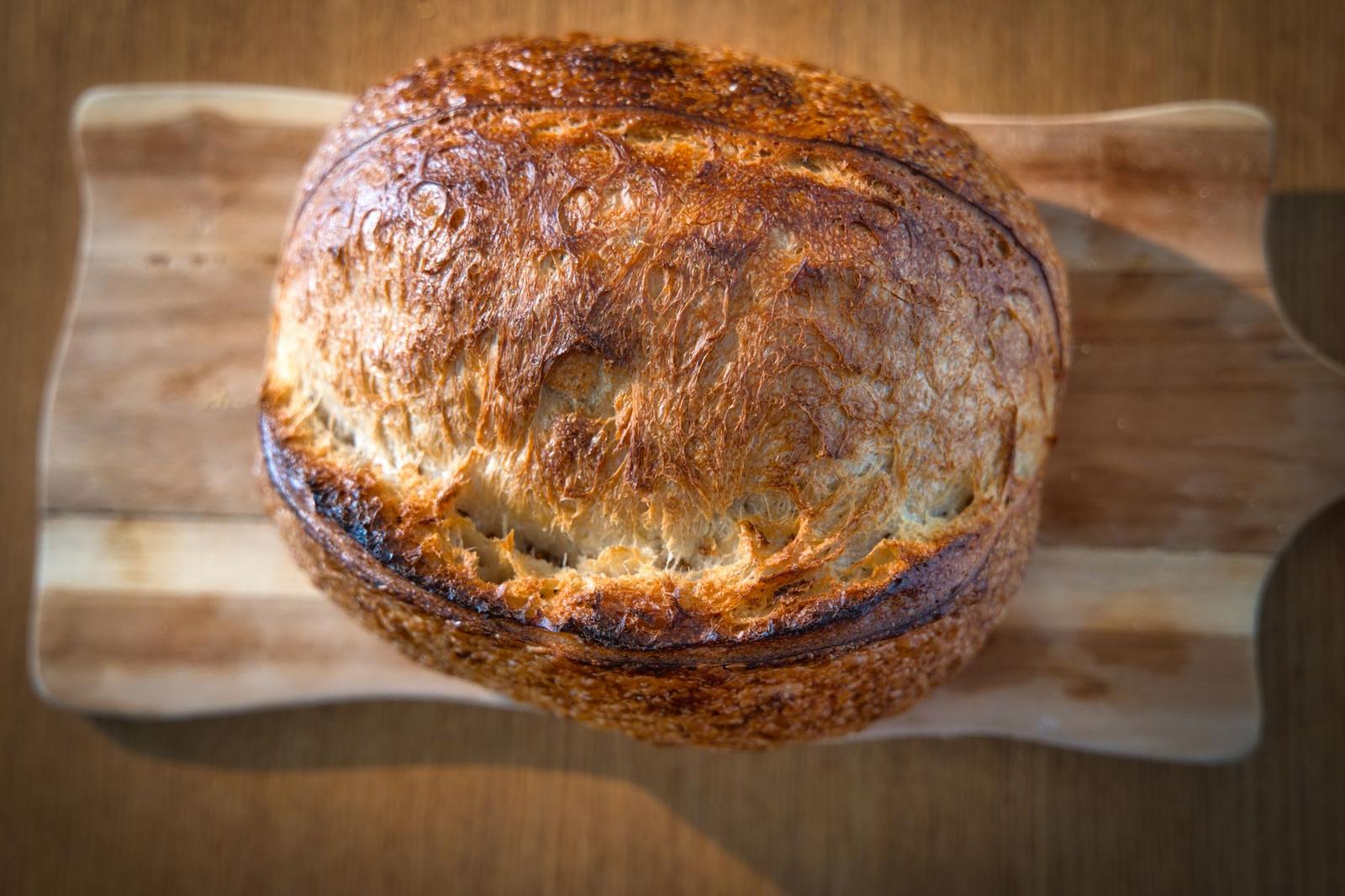
The Bake guide walks through a Naturally Leavened Sourdough Bread. King Arthur Baking describes it as having a deep brown crust, rich flavor and mild tang, and says it relies solely on your starter for its rise, as laid out on the Bake page.
If you feel unsure about a brand-new starter, the same page suggests its Rustic Sourdough Bread, which uses a bit of packaged yeast for insurance. That makes it a gentle choice when you can’t yet tell whether your starter is lively enough.
Sourdough is not limited to loaves. The guide calls it a welcome ingredient in everything from bread and cake to pretzels and pizza crust, so once your starter is thriving you have plenty of options.
While a loaf cools, the fudgy brownies recipe makes a quick, starter-free treat. If you want a different dough to practise on, the homemade pizza dough guide is a good companion project.
Keeping your starter alive between bakes
Once you have baked, the aim is to keep a healthy portion for next time. The Bake guide gives a clear routine:
- Measure out the amount your recipe calls for.
- Retain 113g of starter for the future and discard any additional.
- Feed that retained portion before it goes into the refrigerator.
Feeding before chilling means the retained starter has fresh flour and water to work through while it rests. When you want to bake again, feed it until it is active and doubling, then follow the ripeness signs above.
Habits that make your first loaf easier
A few small habits help you stay calm while the starter finds its rhythm.
- Weigh your flour and water instead of guessing.
- Judge the starter by how it looks and smells, not by the calendar alone.
- Bake with a slightly past-prime starter rather than waiting for a perfect moment.
- Start with the recipe that includes packaged yeast if your confidence is low.
Treat each bake as practice. Your starter is a living ingredient, and it tends to reward patience more than perfection.
Frequently asked questions
What do I need to begin a starter?
Show answer
Just flour, water and several days of patience, according to the beginner post. A kitchen scale makes the daily feeding more consistent.
Can I still bake if my starter looks a little tired?
Show answer
Yes. When a starter has slipped slightly beyond its peak, King Arthur Baking’s Bake page says it remains usable for baking.
Do I have to add commercial yeast?
Show answer
Not for the naturally leavened loaf, which gets all its lift from the starter, per the Bake page. The rustic version adds a little packaged yeast as a safety net.
What happens to the starter I don’t use?
Show answer
Hold back 113g to keep going, feed it, and then chill it, as the Bake guide advises. Any extra beyond that portion is discarded.