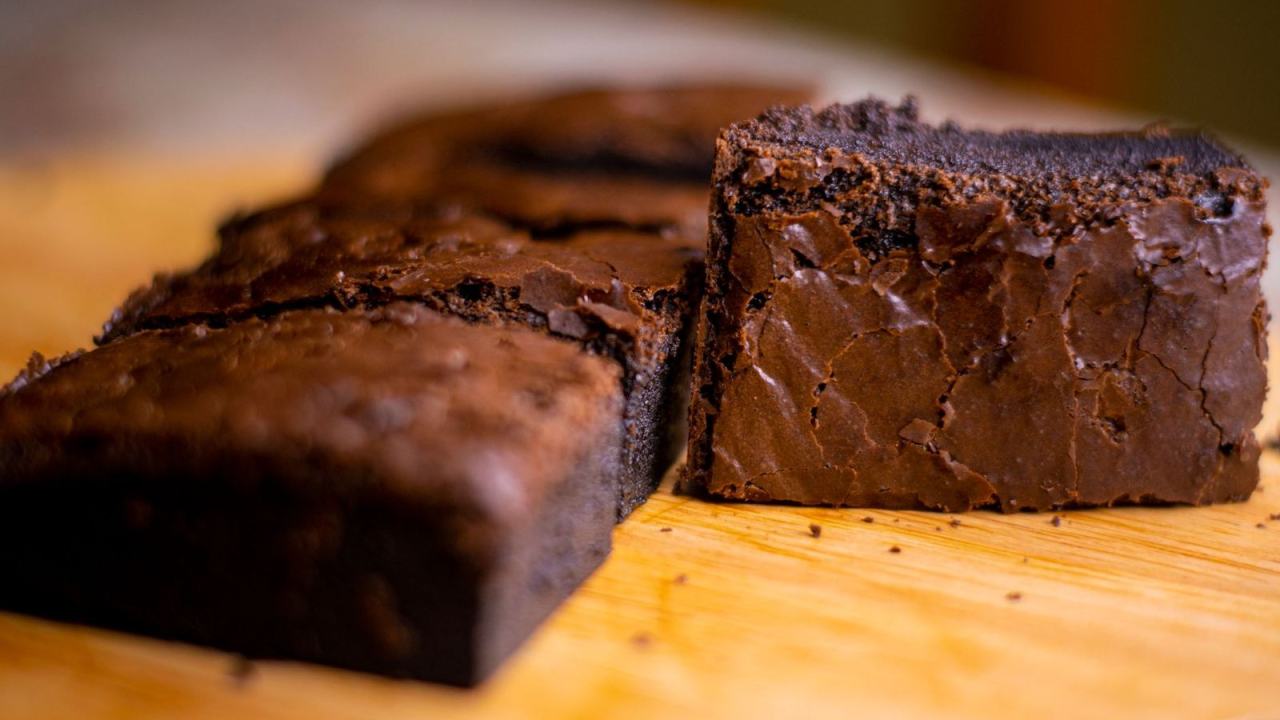
Worried your brownies will turn out cakey? This fudgy brownies recipe shows you the fix: more fat, less flour, melted chocolate, no leavening, and a slightly underbaked finish.
Once you have the method down, browse more baking recipes for your next bake.
| Fudgy brownie lever | What to do |
|---|---|
| Flour | Less flour, mixed minimally |
| Fat | More fat, from butter or oil |
| Eggs | More egg yolks |
| Chocolate | Melted chocolate |
| Leavening agent | None |
| Doneness test | Toothpick with a few moist crumbs |
These points come from Popular Science and Yahoo Lifestyle. Baking advice can change as cooks test new ideas, so check the sources before you rely on it.
What makes brownies fudgy?
A fudgy brownie is mostly a matter of ratios. Popular Science’s formula for the fudgy style is less flour, more fat, more egg yolks, melted chocolate and no leavening agents, and it adds that you should mix lightly and slightly underbake (Popular Science).
Yahoo’s write-up of Thomas Joseph’s advice says the same thing in simpler terms: fudgy brownies have a higher fat-to-flour ratio than cakey ones, so the lever you pull is more butter and chocolate or less flour (Yahoo Lifestyle).
That means you do not need a secret ingredient. You need to decide which texture you want, then push each ingredient in that direction.
How each ingredient shapes the texture
This section walks through the pantry items one by one, using the explanations from Rice University chemistry professor Dr. Lesa Tran in the Popular Science piece.
Flour and eggs
Flour forms gluten when it meets water, and the more flour you add and the more you mix, the stronger that network gets. Use less flour and mix minimally, and you keep the brownies dense and fudgy.
Eggs add structure and richness. Egg yolks contribute fat, so a batch with extra yolks turns out richer and denser, while extra whites push it toward a lighter, cakier crumb.
Sugar and salt
Sugar keeps brownies soft by binding to water, and it also builds the shiny, crackly top. Sugar dissolved in the batter rises to the surface during baking and re-forms into crystals, which create that signature crust.
- For a chewier result, use more brown sugar than white sugar.
- To cut back on sugar, try caster sugar, because brownies made with smaller sugar particles tasted sweeter and were softer and moister in the study Popular Science describes.
- Add a pinch of salt, which helps your taste receptors detect sugar more effectively.
Fat: butter or oil
Whether you pick butter or oil, more fat means a richer, fudgier brownie. A study comparing butter with nut oils such as almond, pistachio or walnut oil found oil-based brownies softer, more elastic and moister, and often preferred in taste tests.
Chocolate or cocoa powder?
Here the sources do not fully agree, which is worth knowing before you shop. Popular Science says melted chocolate brings cocoa butter, which solidifies as it cools and gives a dense, fudgy bite, while cocoa powder has less fat and gives a lighter, drier crumb.
A HuffPost UK writer who tested many recipes found the opposite in her own kitchen. She says her densest brownies never used melted chocolate in the batter, because cocoa powder leaves the butter to set the texture, and butter is much softer than cocoa butter at room temperature.
A practical way to choose is to treat the two views as two routes to fudgy. Melted chocolate gives a firmer, fudge-like bite, while a cocoa-led batter leans softer and gooier. If you use cocoa powder, Popular Science notes that natural cocoa is more acidic and sharp, while Dutch-processed cocoa is smoother and mellower.
Step-by-step method
This guide gives you the method and the logic rather than exact quantities, because the sources describe ratios and not a measured recipe. Take amounts from a tested recipe you trust, then adjust them with the levers above.
- Choose a metal pan and prepare it, since metal heats quickly and gives firmer edges.
- Melt your chocolate together with the butter, or use oil if you want a softer, moister crumb.
- Whisk in the sugar and the eggs, adding an extra yolk or two if you want a richer result.
- Stir in a pinch of salt.
- Fold in the flour gently and stop as soon as it disappears, so little gluten forms. Leave out baking soda and baking powder.
- If you like pockets of chocolate, fold in chunks or chips last.
- Scrape the batter into the pan and bake until a toothpick comes out with a few moist crumbs.
- Let the brownies cool in the pan before you cut them.
The HuffPost UK writer adds chocolate chunks after everything else is combined, so they affect the texture less. Popular Science says chips hold their shape somewhat, giving little melty pockets much like those in chocolate chip cookies.
Pan, doneness and cooling
The pan and the timing decide whether a good batter ends up fudgy. Metal pans heat quickly, giving faster bake times and firmer edges, while glass and ceramic conduct heat more slowly and retain it longer, which can lead to uneven baking (Popular Science).
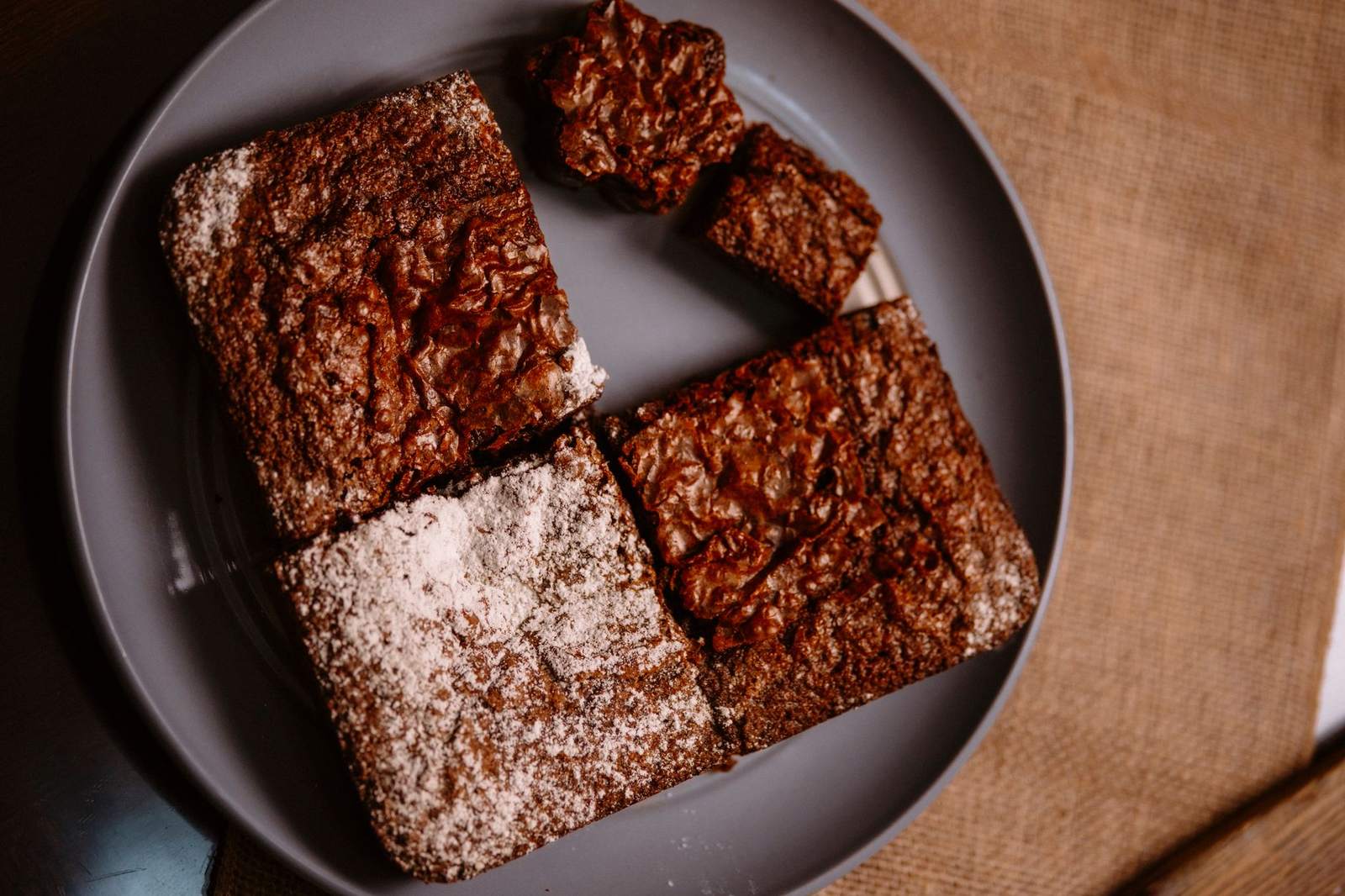
Doneness is where most people overshoot. For a fudgy centre, Tran says to take the pan out when a toothpick in the middle comes out with a few moist crumbs, whereas a clean toothpick points to a cakier centre.
Remember carry-over cooking: brownies keep cooking after they leave the oven because of the heat held inside them. That is why a slightly underbaked centre in the oven becomes the fudgy centre on the cooling rack.
Adjusting a batch to your taste
If your first tray is not fudgy enough, change one thing at a time so you can tell what helped. Yahoo’s guidance is to gradually increase the butter and chocolate, or decrease the flour (Yahoo Lifestyle).
| Texture goal | Adjustment |
|---|---|
| Fudgy | Less flour, more fat, more egg yolks, melted chocolate, no leavening agents |
| Cakey | More flour, less fat, more egg whites, cocoa powder, plus a leavening agent |
| Chewy | Plenty of sugar (brown rather than white) and fat |
This comparison follows the bottom-line formulas in Popular Science, which may be revised, so check it before you rely on it.
Once brownies feel easy, the banana bread recipe is a natural next bake, and sourdough bread for beginners is a good place to go if you want to try something slower.
Frequently asked questions
Can I swap butter for oil in brownies?
Show answer
Yes. Researchers who compared the two found oil-based brownies softer and moister, and tasters often favoured them. Either fat works for a fudgy result as long as the total amount stays generous.
Why are my brownies cakey?
Show answer
The usual culprits are too much flour, heavy mixing, a leavening agent or baking until the toothpick is spotless. Reverse those, and the crumb tightens up.
Does salt really belong in a sweet batter?
Show answer
It does. Rather than making dessert salty, a small pinch sharpens how sweet the chocolate and sugar taste.
Should I use a glass dish?
Show answer
You can, but expect less even results. Metal is the safer choice, and its quicker heat also helps the edges set.