Want homemade soup recipes that taste rich without a fuss? Build a flavorful base, simmer gently, and cool your leftovers properly. Do that and one pot can feed you for days.
If you are planning the rest of your week, the home cooking recipes hub has more ideas to sit alongside your pot.
| Soup fact | Value |
|---|---|
| Refrigerator life of soup | 3 to 4 days |
| Best-quality freezer life of leftovers | 3 to 4 months |
| Longest time at room temperature | two hours |
| Maximum depth in cooling containers | two inches |
| Reheating temperature | at least 165 °F |
| Range where bacteria grow fastest | 40-140 degrees Fahrenheit |
These figures come from Nebraska Extension’s soup safety guide and University of Wisconsin-Madison Extension’s page on storing soups and stews. Guidance can change, so check the source before you rely on them.
Start with a flavorful base
Almost every good pot begins the same way: a base of chopped onion, carrot and celery softened slowly in oil or butter. Add garlic and dried herbs near the end of that stage so they perfume the fat without scorching.
From there, the body of the soup is up to you. A hearty soup made with vegetables and meat, poultry, fish or dried beans can be the main dish of the meal, as Nebraska Extension notes.
Choose your liquid with care. Homemade stock gives the deepest taste, but a low-sodium boxed stock or even plain water works if your base and seasoning are strong.
A simple method for almost any pot
You do not need a different technique for every recipe. This sequence works for vegetable, bean, lentil and chicken soups alike.
- Soften the aromatics in fat over medium heat until they smell sweet and turn glossy.
- Stir in spices, tomato paste or dried herbs and cook briefly to wake up their flavor.
- Add the main ingredients, such as diced potatoes, rinsed lentils, soaked beans or chicken pieces.
- Pour in enough stock to cover, bring to a boil, then lower the heat to a gentle simmer.
- Cook until the slowest ingredient is tender, tasting and adjusting salt as you go.
- Finish with something bright, such as lemon juice, vinegar or fresh parsley.
Simmering gently rather than boiling hard keeps vegetables intact and meat tender. For a creamy texture without cream, blend a ladleful of the soup and stir it back in.
Soup ideas to rotate through
Once you know the method, small changes give you a whole repertoire. These are reliable starting points.
- Lentil soup: add curry spices and a squeeze of lemon.
- Potato soup: mash part of the pot for a thick, comforting body.
- Tomato soup: roast the tomatoes first for a sweeter, deeper taste.
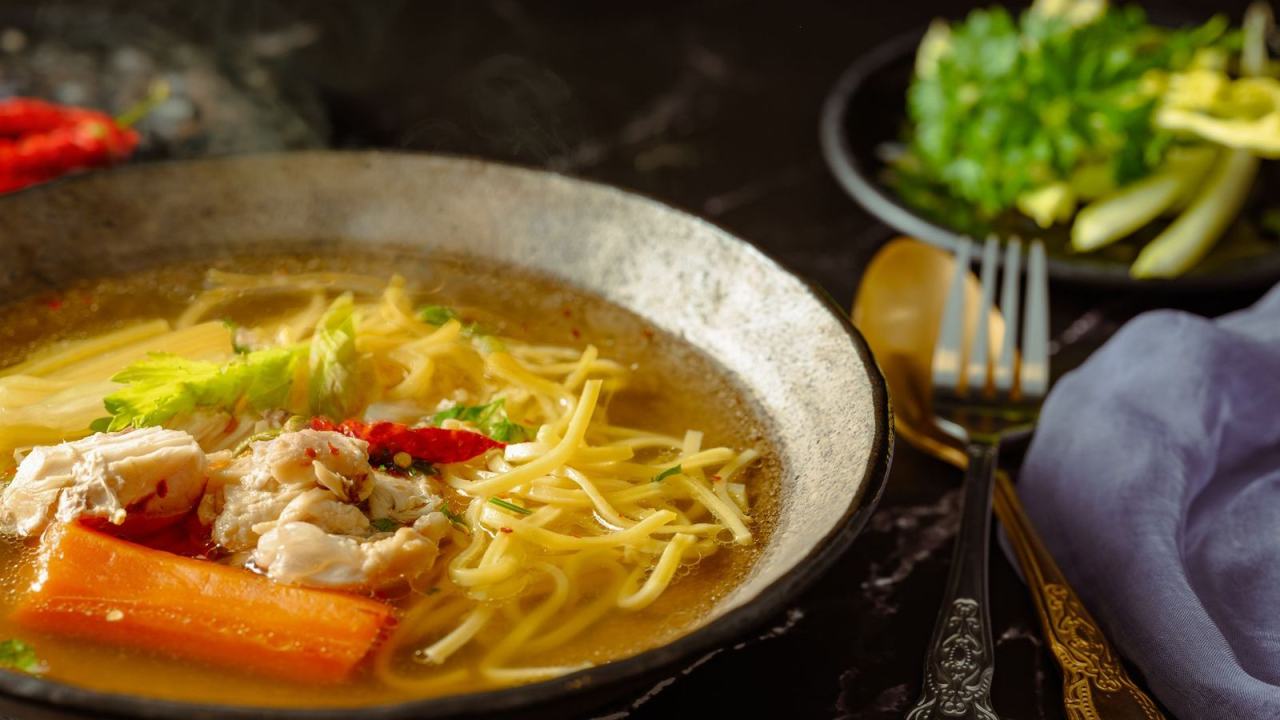
- Chicken noodle soup: add the noodles late so they stay springy.
- White chicken chili: use white beans and mild green chiles for a thick, spoonable bowl.
Plenty of these pots work without meat, and our vegetarian dinner recipes show how to build satisfying meals around beans, lentils and vegetables.
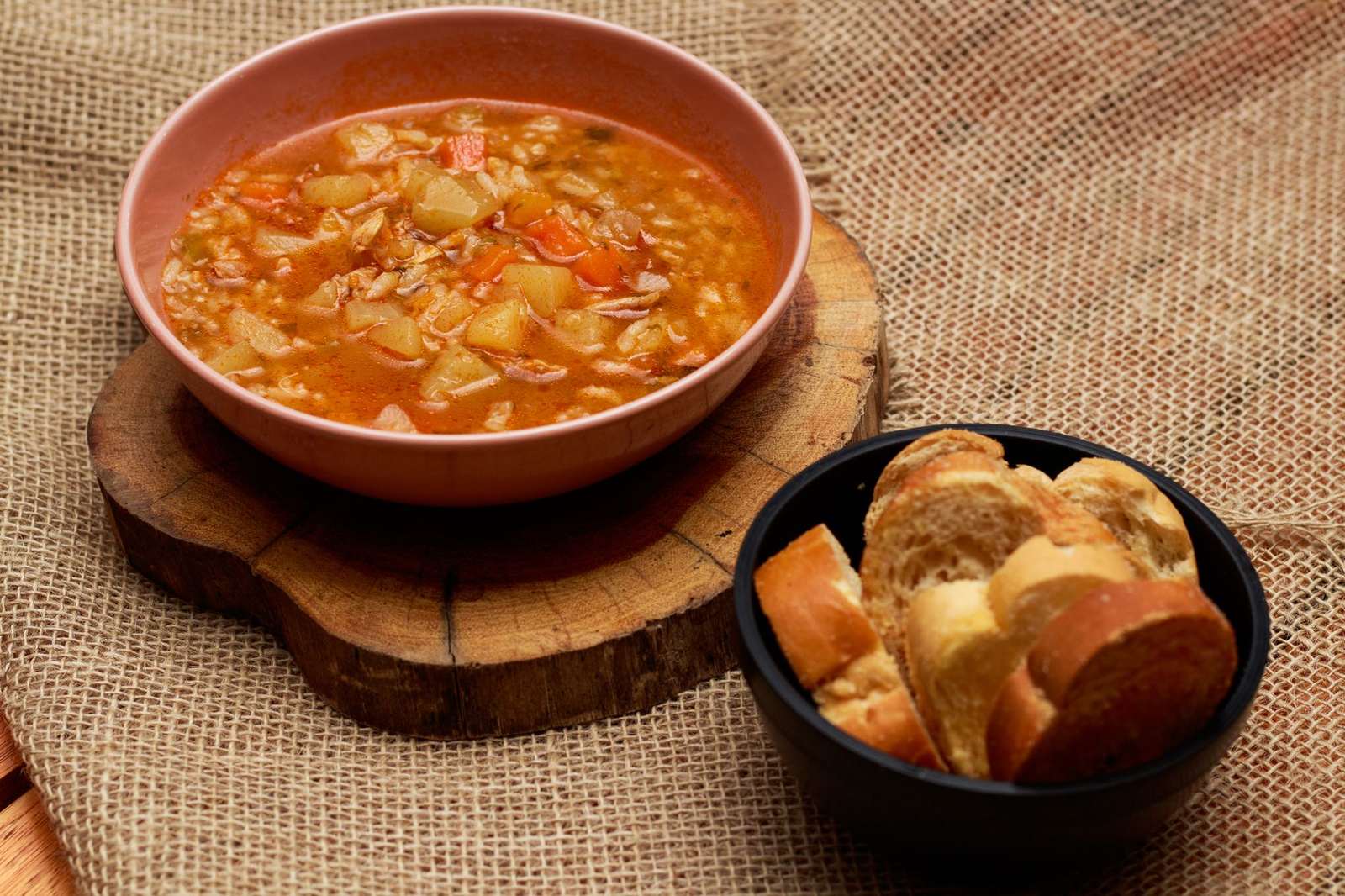
How do you cool and store soup safely?
A big batch is only a bargain if it stays safe. Bacteria grow most rapidly between 40-140 degrees Fahrenheit, and they can double in number in as little as 20 minutes, according to University of Wisconsin-Madison Extension.
That is why a full stockpot should not go straight into the refrigerator. Nebraska Extension advises against putting a large pot of hot soup directly into the fridge, because it cools too slowly.
Use these steps instead:
- Transfer the soup to shallow containers, filled no more than two inches deep.
- Chill it in an ice or cold water bath if you want it down faster.
- Refrigerate promptly, and never leave it out for more than two hours.
A thermometer-focused guide from ThermoWorks suggests pouring soup or stock into shallow vessels such as cake pans for the first stage of cooling. Stirring from time to time helps the heat escape.
Once it is cold, plan to eat refrigerated soup within 3 to 4 days or freeze it, as Nebraska Extension recommends. For the best texture, freeze it in freezer bags or freezer containers, and use frozen leftovers within 3 to 4 months, per the Wisconsin guidance.
Reheating and serving leftovers
When you serve soup a second time, reheat it until it is steaming hot throughout, at least 165 °F, says Nebraska Extension. Warm only the portion you plan to eat so you avoid repeated cooling and reheating.
Most soups, apart from seafood ones, can taste even better the next day, which makes a weekend pot a smart move. Pair a bowl with crackers, bread or fruit and you have a full meal.
If your mornings are rushed, a mug of warmed broth-based soup can sit beside the ideas in our easy breakfast recipes.
Frequently asked questions
How long does homemade soup last in the fridge?
Show answer
Plan on eating it within 3 to 4 days of cooking, or move it to the freezer before then. The Nebraska Extension guide gives this window for best safety and quality.
Can I leave soup on the stove overnight?
Show answer
No. Nebraska Extension says to avoid letting soup set at room temperature for more than two hours, and reheating will not fix the problem. ThermoWorks explains that Bacillus cereus can produce a toxin that stays on the food after the bacteria are killed.
What is the best way to cool a large pot?
Show answer
Spread it out. Ladle the soup into wide, shallow containers so the heat can escape, and set them in a cold water bath if you are in a hurry. Cover the containers once the soup has fully cooled.
Should I freeze soup in one big container?
Show answer
Smaller portions are better, since you can thaw only what you need. The Wisconsin Extension page recommends sturdy freezer bags or freezer containers over old tubs from other foods.